Young People are the future of the Church

For over 20 years, Youth Minister have been arguing that the youth are not the future of the Church, they are the Church of today. Frankly, it hasn’t worked, young people are still leaving the Church, youth ministry budgets are still low and staff levels have either declined or stayed the same. The “Church of today” mantra hasn’t worked. What if we return to the motto of “young people are the future of the Church” would it work any better?

Here are a few questions we might ask our Parish Council, Vestry or Elders board if young people are the future of the Church:

  1. Senior Minister:  if you had to recruit your next Senior Pastor, Minister or Parish Priest from within your own people, are you developing future leaders?  Do you have enough good Christian young people entering theological education so that your next Senior Pastor is a great God honouring leader?  Who is your Senior Minister personally mentoring to take over their job in the future?
  2. Youth Pastor: if you had to recruit your next Youth Pastor from within your own people are you developing young people who have had a positive experience of youth ministry?  Do you mentor young adults so that they feel supported enough to take on a leadership role in future years as the Youth Ministry Coordinator?  If young people drop out of Church between the ages of 10-14, perhaps the 14 year old who just gave up on your church was your future Youth Pastor walking out your back door.
  3. Parish Council: if you had to recruit your next Elders board, Vestry or Parish Council member from within your own people would it be possible?  Are there young adults coming through your church who honour God with their lives and in the future could stand for leadership in your parish?  If you are not forming young people in your church today then the future of your Parish or Church leadership team is not looking good.  Perhaps the young people sitting in your church today who are bored and making paper aeroplanes out of the bulletin are thinking the last thing they want to do with their life is serve the Church.
  4. Financial Partners: nobody likes to mention the fact that the Church has always needed, and will always need, people who earn income in the world and donate it to the Church.  Are you investing in young people teaching them to go into the business world and be the best they can?  Because one day those young people will earn a pay cheque and make a decision on how much they give to the Church.  If they skip youth ministry and stop coming to Church, pretty soon your church will have fewer and fewer financial partners.  Perhaps the 14 year old who walked out your back door never to return was going to become the key financial partner in the future of your parish.

If we truly believe that the young people are the future of our Church wouldn’t we do things differently?  If your church had to recruit all its future leaders and financial partners from within your church wouldn’t you take the young people more seriously?  It is my opinion that many churches don’t think the young people are the future or the present of the Church, they are someone elses problem. Many churches are doing nothing hoping that someone else is forming great leaders they can steal/employ years down the track.

Absolutely we should see young people as the Church of today, but if we are serious about them being the future of our Church then let us invest far more into youth ministry than we currently are too.  Please a comment or share your thoughts below.

markoffaith mark of faith Mark of Faith

Sometimes in ministry we need to “Pay it back”

Have you ever heard the term “pay it forward“? It is a term that often gets used in ministry circles to encourage us to sow the blessings we have received from mentors into the next generation.  We receive so much from the mentors who formed us and we pay it forward to those that we mentor.  But do we ever pay back those who have mentored us with a thank you?  Ministry can be such a thankless task that occasionally we need to thank those who mentored us along the way.

Recently I was working with a great young leader, asking him about his journey of faith.  He had a great outlook on ministry so I asked him about his role models and he was able to list four or five men who had mentored him.  These were youth group leaders or young pastors in his Church.  It happens that I know some of these men and I bet they would love to know the fruit of some their work.  More importantly that experience made me reflect on the people who I needed to thank for sowing into me.

St Paul talks about watering seeds that other have planted and to recognise that God does all the work.  Sometimes in ministry we seemed to be doing a lot of sowing and watering without much growth.  In many cases we never see the fruit of our labour because God plants the person in another ministry or another church.  We can go for years without knowing what we have achieved.  If you find yourself in this situation here is three things to do:

  1. Create a culture of Gratitude:  instead of waiting for someone to thank you for your ministry, start thanking those who serve  with you in ministry.  Thank the volunteers who serve every week, thank those who pray for the ministry and thank those who financially support your ministry.  Don’t forget to thank the people above you, your Senior Minister, Parish Priest, Vestry, Elders board or Parish Council.
  2. Thank your Mentors: think of all the people who have mentored you and sown into your development. Write them a little thank you note, message them on Facebook or email them.  Whilst it is nice to send them a card, just thank them any way you can.  Often we still look up to our mentors and forget that they are real people who get disheartened just like we do.  If you appreciate your mentors by thanking them it will help them stay strong in their ministry too.
  3. Love your Family:  often our family are the forgotten heroes of our ministry.  Perhaps your parents took you to church as a child, supported your faith or paid for you to go on camp.  Maybe your relatives encouraged your development as a teenager.  Maybe your wife, husband and kids have allowed you to go to one more ministry event.  Love your family first and thank them for the support they give you.

We should take the blessings sown into us and pass it forward to the next generation.  But don’t forget to pay back the mentoring, love and attention that you received from others.  Learn to pay it forward and pay it back.

markoffaith mark of faith, Mark of Faith

The Reformation and the 12 tribes of Israel

When the Israelites left Egypt under the leadership of Moses, they were one people.  When Jesus sent out the 72 to preach the Gospel they were one Church.  In the Book of Numbers we read that Moses ordered the people of Israel into 12 tribes ready to enter the promised land.  In the book of Acts we read that Peter and Paul are ordering the Church ready for Mission.  So where did it all go wrong?  Why do we read in the Book of Judges that the tribes are at war and one tribe is almost wiped out?  Why do we read the books of history and have a church that is so fractured that some branches are almost wiped out?

It seems that we have become used to the history of Israel as we read the Old Testament.  We know that the tribes have come together, worked together and survived many attacks from other nations.  Yet we also know that in some periods of the Old Testament the people of Israel were fighting against each other.  In Judges the tribe of Benjamin are almost wiped out and God has to give them wives to keep the tribe multiplying.  In Samuel the Kingdom is divided into Israel and Judah.  We also know that the theme of exile runs through the old testament but that God always remains faithful to His Promises.

So it seems to me that the Reformation both in Europe and in England were like the tribes of Israel splitting in the promised land.  Once the Israelites and Christians moved from being the people of God into Geopolitical nations all the trouble started.  Is it just me or does this feel a little bit like the Book of Samuel where God says that it is not good to have worldly kingdoms for God is our King.  Whilst I am no Church history scholar it seems that many difficult times in Church history have been tied to political forces.

In January 2012 the Tablet published two articles about the formation of a joint commission between the Vatican (Catholic Church) and the Lutheran World Federation.  The commission will look at a joint statement on the history of the Reformation in preparation for the 500 anniversary of the Luther statements in 1517.  In the articles it acknowledges that in the past both churches have blamed each other for the Reformation, yet now they recognise that both sides had a hand in the split.  It seems that it became Geopolitical, the tribe of Vatican were at war and split with the tribe of England and the tribe of Germany.

In recent years as the Church has lost it hold on almost every Government in the World, it is becoming easier for the Church to reunite as the people of God.  Instead of seeking to become one Church under one banner (such as Catholic), perhaps we should learn from the bible.  The 12 tribes of Israel is an example to us all that the Body of Christ is made up of many parts, each with its own special role.  Lets not try to be the same but seek unity as the Body of Christ.

3 Questions to ask when preaching to teens

This is guest post by Michael Angelo Crisafio.  Michael speaks to teenagers every week through school retreats, presenting at Impact Leadership and through preaching at Grace Unlimited.   You can follow Michael on Twitter.  If you would like to write a guest post please contact Mark McDonald.

I believe the quality of the things that you do is going to largely depend on the quality of questions you ask yourself.

When it comes to preaching to youth and in particularly school aged teenagers, it’s really going to be like herding cats if you are not going to ask the Holy Spirit to be with you daily.

In my time this year speaking to thousands of kids in schools all over Australia both in secular capacity, teaching out of bible based leadership principles or directly as a school based retreats speaker and facilitator there are some questions that I always ask myself when I preach.

  1. Who are you? your identity is largely linked to the quality of what you will delivering. are you a person of prayer? are you a person of action. Living out the Gospel is just as important as knowing the Gospel and when you can start seeing that in your own life others will see it too.
  2. What’s your story? Your preaching will come alive when it’s personal; when it’s a story only you can tell.  Teens love stories! You don’t have to look far to see what you’re competing with the likes of Twilight and 140 characters of conversation. It’s said that humour is a universal language and it’s always good to tell stories which bring out passion and humour; focus on things that people can all agree on – like sacrificial love.
  3. What does the bible have to say about it? The mysteries of the bible are as real and true and powerful today as they were 2000 years ago. Ancient rabbis talked of it like an any-sided gem, that when you hold up to the light a unique reflection is cast.  Teens want to know that the bible is relevant; as a matter of fact I make it my personal responsibility to allow people to see that connection as much as possible. If you don’t tell them, then the trash magazines, their friends or social media will tell them.

Please leave a comment about the tips you have for preaching to teens.

Are Ken Moser and Tim Hawkins similar or opposite?

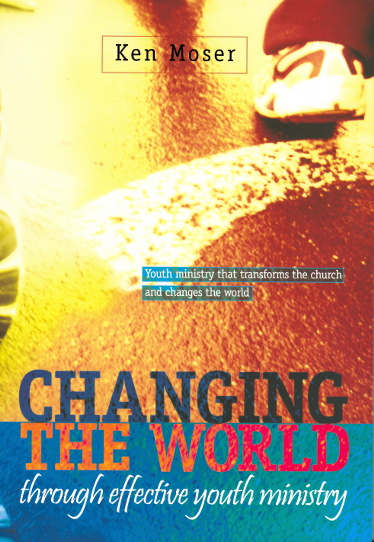
Recently I attended a training day with Tim Hawkins where he encouraged youth ministry leaders to preach the Gospel, break open the Word with young people and see discipleship as the key.  Then I attended a lecture with Ken Moser where he suggested that we should do Christian things in youth ministry such as preach the Gospel and break open the Word.  Whilst I thought they were similar in their core message it surprised me that at least one training college sees the two as polar opposite models of youth ministry.

From my experience of youth ministry these two “experts” are in the same ball park, they are both focused on preaching the Gospel.  Sure they have had to differentiate their model, either because context or to sell books, but they are very similar.  When you contrast them to a Taize style youth ministry or social justice youth ministry, Ken and Tim are no different.  It is like Ken and Tim are different Rugby League teams with different styles of play but compared to Motor Racing they are the same.

In my opinion Ken and Tim support a “Jesus preaching, bible believing” style of youth ministry that puts them in the same group.  Your style of preaching doesn’t make you polar opposites.  Whether you allow fun at your youth group or you are more serious doesn’t make you polar opposites.  At this point I want to recognise that the two models are not identical, there are differences.  I just don’t think they are opposite models for youth ministry.

Why is this important to write about?  Rather than becoming a fan of the Tim Hawkins model or a fan of the Ken Moser model we should become fans of Jesus.  I know that sounds obvious but when we spent our time comparing and contrasting two models of “Jesus preaching, Bible believing” youth ministry we are no better than the people who spend all their time arguing of the virtues of the football team they support.

So having met Tim and Ken personally I like a bit of both of their youth ministry styles.  I like that they point young people to Jesus and encourage leaders to break open the Word of God.  I will continue to learn from both men as I grow youth ministry in my context, I hope you can too.  Learn from both styles of youth ministry rather than picking one over the other.

Are Australians ahead of America in ministry?

I have just walked out of the Peter Corney Lecture at Ridley College in Melbourne where Ken Moser addressed the gathering with a few observations about the Youth Ministry landscape.  If you don’t know who Ken Moser is, he is an American who came to Australia, worked here in a number of settings and now works in Canada.  He has written many good books from his time in Australia which have that Australian attitude of doing stuff that works.

Whilst I can’t quote Ken word for word I want to share a thought with you all from his talk but here are few points to keep in mind:

  1. Traditionally Australians have looked to American for the Youth ministry model, bought the books and hired them as guest speakers as “the expert”.
  2. The key American practitioners are all writing that the youth ministry model is no longer working as the society becomes increasingly post Christian.
  3. Australia was never as Christian as America
  4. Australia moved into a post Christian society 10-20 years ago depending on the view point you take.

So here is the big idea:

Why are we looking to America who is 20 years behind us for what is coming next?

Whilst I can’t remember the exact wording, Ken is suggesting that in fact Australia should and can lead American youth ministry to what comes next.

After the lecture I had the privileged of taking to Peter Corney himself, who started ministry in 1960 and has influenced youth ministry in Melbourne.  His perspective was that ministry has always changed and evolved similar to the down turn in the great Sunday School movements of the 1960’s and 1970’s.

So whilst I usually like to blog with you about a solution, tonight I thought I would share with you these thoughts and admit that I am as keen as ever to work with other Aussies to think though what’s next.  So please leave a comment to add to the conversation about what comes next.

Do some contestants on the Voice have the Mark of Faith?

Last night I was watching the television program The Voice.  It is a show that I have been watching since the season started and I have grown to admire many of the contestants as they sing a variety of songs.  One thing that has struck me is how many of the contestants seem to have the mark of faith, something about them makes me think they are Christian.  Other contestants may not be Christian but the Gospel is present in their story even if they don’t know it yet. Consider a few contestants:

  • Two contestants are openly Christian
  • Two contestants were “lost” but have been found
  • One contestant brings hope to street kids in their “day job”
  • One contestant is inspiring because of her blindness
  • One contestant is so Soulful that a judge felt “baptised by the Spirit” after one hit performance.

Just in case you haven’t seen the show, I am talking about Australian singers singing on an Australian show.  This isn’t an American show where almost everyone thanks God.  Perhaps it strikes me as odd because I expect Australian television to be so secular that when faith, hope and joy pop up it stands out.  Perhaps it is just me but some of the elements on the Voice are not just human emotions but real hope and joy that only come from Faith, the mark of faith on someone’s life.

But I am sure that there will be some people out there that think it is not Christian enough, the contestants aren’t out there enough with their Faith.  Not one contestant has openly thanked God and some others haven’t identified themselves as Christians.  Yet when contestants on the TV show Survivor were openly Christian, it wasn’t a very good picture of our Faith.  So I want to suggest three ways that the mark of faith is present in The Voice:

  1. Worship – whilst a few singers have sung songs with a Christian message, many singers have sung in a way that takes you to another place.  This ability to go beyond the words of a song to move people is a gift that comes from God.  When we truly worship we are moved to another place, even if we aren’t singing a “worship” song.  For example when Darren Percival sung “this time love will be for ever” Keith Urban said “all the atheists will be confused now” because the song moved everybody.
  2. Character – some of the contestants have admirable character, you would love to be around them.  Whilst some of the contestants wouldn’t be Christians and others may be loosely Christian, the TV show has shown how important character is.  In most cases I just want the contestants to succeed because I like them so much.
  3. Building up – whilst you don’t have to be Christian to build people up, I believe that seeing the best in others is the way God sees people.  The secular narrative on the other hand is to tear people down to get ahead, to support others as long as they support you and make others look bad to make yourself look better.  Now I haven’t seen everything that goes on whilst the cameras aren’t rolling, but the bits the cameras have picked up are much better than other TV shows on at the moment.

So whilst I am not saying the Voice is a Christian show or that everyone is Christian, I am impressed that the Gospel values of Faith, Hope and Joy are seeping through the elements of the show.  If you want to see how effective a quiet witness is, rather than a bang them over the head with the Gospel approach, then check out some of the video clips online of the Voice.

Don’t get trapped within a Youth Ministry Cohort

Have you ever had a bumper group come through your youth ministry?  I mean a group that is firing on all cylinders.  This group volunteers for everything, invite their friends, engage in worship, pray regularly, take an active interest in the youth ministry and everything is going very well.  These can be the golden years or dream years for the youth ministry.  You seem to connect with this group, you make friends more easily and they really seem to understand you.  In simple terms a cohort is a group like this that moves through your ministry in a group, they join and leave together.

Leading this cohort in youth ministry is what we dream of, it makes it worthwhile.  But the trap is that this group grows up and moves out of your ministry into the next group, which you don’t lead.  Perhaps you have never seen this happen, maybe you have.  In the youth group that I attended, the dream cohort were finishing up just as I joined.  It seemed that just after I joined everyone got too old for the group and left, leaving all of us a little deflated.  In fact these dream cohorts can create such a bubble in a group that when it bursts, they all leave, the group can’t go on.

Recently I put this question to Tim Hawkins from St Paul’s at Castle Hill.  Whilst Tim has been in Youth Ministry for a long time, he has led cohorts through St Paul’s for 18 years, so I thought he would have experience in this area.  Well Tim’s advice was really really simple.  He said:

“You gotta keep thinking of who is coming next”

Sounds so simple that everyone would do it.  But here are several practical tips that Tim mentioned:

  • People in Children’s ministry should keep an eye on birth announcements, these are the couples who will be bringing their kids to children’s ministry in a year or two.
  • People in Junior high ministry should be looking at the years 4,5,6 who are getting bored in the children’s ministry and are ready to move on.
  • People in Senior high ministry should be looking for the next Senior who can learn to lead at their youth ministry nights and be trained to run small groups.

Whilst we are all tempted to look for a complex plan, it seems from Tim Hawkins that it is as simple and as complex as keeping ahead of the game.  It might be hard and repetitive work but the alternative is having to rebuild your ministry from scratch every time a dream cohort leaves.  So who is coming next in your ministry?  Do you need to start recruiting for the ministry below you in the age cycle so you have a pipeline coming into your ministry?

What are your youth ministry tips for avoiding “Cohortism”?

A Lesson about tithes and offerings from Exodus

When ever it comes time for the collection at Church, taking up the tithes and offerings, people often use the passage “God loves a cheerful giver” 2 Corinthians 9:7.  Whilst this may be a standard passage used at the offerings time at Church, there are a few good lessons about God’s purpose for offerings in the book of Exodus:

  1. God prepares hearts – In Exodus 11:2 God tells Moses that the hearts of Egyptians are being prepared to give the fleeing Israelites gold and silver.  So each Israelite is to ask their neighbour for gold, silver and clothing before they leave Egypt.  At this point the purpose of this “treasure” is unclear.
  2. God provides abundantly – true to God’s word when the fleeing Israelites ask for gold, silver and clothing the Egyptians hand over these items.  In Exodus 12:36 it reveals that the Israelites were able to “plunder” Egypt as they left.  Again at this point the purpose of this “treasure” is unclear.
  3. God invites people to give an offering – after the Israelites have been “on the road” for some time, still carrying the gold, silver and clothing, God asks Moses to give the people an opportunity to make an offering.  They should make their offering if their hearts are “prompted” Exodus 25:2.  At this point Moses collects and offering of gold, silver, bronze,yarns and linen, skins and leathers, oils and spices.  Whilst the purpose of this “treasure” is unclear to the people, Moses knows that God is about to use the items.
  4. God uses the offering for His glory – In the rest of Exodus we read how God uses these gifts to build the tent of meeting, the ark of the Covenant and the Mercy seat.  None of the materials needed to create these would have been found naturally in the desert.  It seems that God had an intention for these materials that had a higher purpose than making the Israelites rich.

Exodus provides us with three important lessons about giving offerings to our local Church:

  1. God provides – how often do we think that we earn the money that we give to the Church.  Exodus reminds us that God has a plan to provide us resources long before we have earnt them.
  2. God prompts us – sometimes we know we should be giving more in our tithes and offering but we don’t.  There were probably Israelites who held back their items from the offering, they wouldn’t have received a blessing that God promised.   Whilst God may prompt us to give an offering it is not forced, an offering without free will is not an offering at all.
  3. God knows the plan – often we don’t give in our tithes and offerings until we know the plans for how they are to be spent.  Churches find it easier to get offerings if they identify the plans before taking up the offering.  In Exodus 25 we are reminded that God asks for the offering before revealing His plan.

So God does like a cheerful giver, but perhaps there is more to offering than just being cheerful.  Perhaps there are bigger plans for our tithes and offerings than we can image.

Pentecost

Did you colour this in Sunday School?

Does anyone remember sunday school or primary school classes about Pentecost where you coloured in tongues of fire resting above the heads of the Disciples?  Pentecost was such an easy passage to draw yet it was a confusing passage to understand as a kid because we read about tongues of fire, a rushing wind and a Holy Spirit as a dove.  Whilst I don’t expect kids to get the full understanding of the Holy Spirit, it would be a shame if adults had this limited understanding of the Holy Spirit and Pentecost.

Pentecost is not a memory of an event 2000 years ago but a reminder that God is still active in the world today through the Holy Spirit.  Pentecost is not just an even for “Pentecostals” but for everyone who calls themself a Christian.

Recently at Bible College we debated whether John 20:22 was St John’s version of the Pentecost event that occurs in Acts 1 written by St Luke.  Whilst the debate leaned towards it being a separate event, the main message of our discussion was that Jesus gave the Holy Spirit to the disciples because He was about to leave them.  A better question would be “why did they need the Holy Spirit?”  The answer to this question is that when Jesus ascended into heaven the disciples needed God’s support to carry on the mission of spreading the Good News or Gospel.

The Holy Spirit, or Comforter, is not given to us so that we can be comfortable, but so that we are comforted as we engage in Mission.  If we want to know where the Holy Spirit is working today, take a look at those engaged in Mission.  The Holy Spirit empowers us for mission.  The Holy Spirit equips us for building the Church and equipping the Saints (see Ephesians 4:12).

I have heard it said that the Church doesn’t have a mission, the Mission has a church.  On a day like Pentecost we are reminded that we are empowered to take this Good News out to the world, not keep it to ourselves within the walls of our Church building.  My prayer for you is that the Holy Spirit blesses you with the gifts you need to be bold and courageous in the mission within your community.