Do some contestants on the Voice have the Mark of Faith?

Last night I was watching the television program The Voice.  It is a show that I have been watching since the season started and I have grown to admire many of the contestants as they sing a variety of songs.  One thing that has struck me is how many of the contestants seem to have the mark of faith, something about them makes me think they are Christian.  Other contestants may not be Christian but the Gospel is present in their story even if they don’t know it yet. Consider a few contestants:

  • Two contestants are openly Christian
  • Two contestants were “lost” but have been found
  • One contestant brings hope to street kids in their “day job”
  • One contestant is inspiring because of her blindness
  • One contestant is so Soulful that a judge felt “baptised by the Spirit” after one hit performance.

Just in case you haven’t seen the show, I am talking about Australian singers singing on an Australian show.  This isn’t an American show where almost everyone thanks God.  Perhaps it strikes me as odd because I expect Australian television to be so secular that when faith, hope and joy pop up it stands out.  Perhaps it is just me but some of the elements on the Voice are not just human emotions but real hope and joy that only come from Faith, the mark of faith on someone’s life.

But I am sure that there will be some people out there that think it is not Christian enough, the contestants aren’t out there enough with their Faith.  Not one contestant has openly thanked God and some others haven’t identified themselves as Christians.  Yet when contestants on the TV show Survivor were openly Christian, it wasn’t a very good picture of our Faith.  So I want to suggest three ways that the mark of faith is present in The Voice:

  1. Worship – whilst a few singers have sung songs with a Christian message, many singers have sung in a way that takes you to another place.  This ability to go beyond the words of a song to move people is a gift that comes from God.  When we truly worship we are moved to another place, even if we aren’t singing a “worship” song.  For example when Darren Percival sung “this time love will be for ever” Keith Urban said “all the atheists will be confused now” because the song moved everybody.
  2. Character – some of the contestants have admirable character, you would love to be around them.  Whilst some of the contestants wouldn’t be Christians and others may be loosely Christian, the TV show has shown how important character is.  In most cases I just want the contestants to succeed because I like them so much.
  3. Building up – whilst you don’t have to be Christian to build people up, I believe that seeing the best in others is the way God sees people.  The secular narrative on the other hand is to tear people down to get ahead, to support others as long as they support you and make others look bad to make yourself look better.  Now I haven’t seen everything that goes on whilst the cameras aren’t rolling, but the bits the cameras have picked up are much better than other TV shows on at the moment.

So whilst I am not saying the Voice is a Christian show or that everyone is Christian, I am impressed that the Gospel values of Faith, Hope and Joy are seeping through the elements of the show.  If you want to see how effective a quiet witness is, rather than a bang them over the head with the Gospel approach, then check out some of the video clips online of the Voice.


A Lesson about tithes and offerings from Exodus

When ever it comes time for the collection at Church, taking up the tithes and offerings, people often use the passage “God loves a cheerful giver” 2 Corinthians 9:7.  Whilst this may be a standard passage used at the offerings time at Church, there are a few good lessons about God’s purpose for offerings in the book of Exodus:

  1. God prepares hearts – In Exodus 11:2 God tells Moses that the hearts of Egyptians are being prepared to give the fleeing Israelites gold and silver.  So each Israelite is to ask their neighbour for gold, silver and clothing before they leave Egypt.  At this point the purpose of this “treasure” is unclear.
  2. God provides abundantly – true to God’s word when the fleeing Israelites ask for gold, silver and clothing the Egyptians hand over these items.  In Exodus 12:36 it reveals that the Israelites were able to “plunder” Egypt as they left.  Again at this point the purpose of this “treasure” is unclear.
  3. God invites people to give an offering – after the Israelites have been “on the road” for some time, still carrying the gold, silver and clothing, God asks Moses to give the people an opportunity to make an offering.  They should make their offering if their hearts are “prompted” Exodus 25:2.  At this point Moses collects and offering of gold, silver, bronze,yarns and linen, skins and leathers, oils and spices.  Whilst the purpose of this “treasure” is unclear to the people, Moses knows that God is about to use the items.
  4. God uses the offering for His glory – In the rest of Exodus we read how God uses these gifts to build the tent of meeting, the ark of the Covenant and the Mercy seat.  None of the materials needed to create these would have been found naturally in the desert.  It seems that God had an intention for these materials that had a higher purpose than making the Israelites rich.

Exodus provides us with three important lessons about giving offerings to our local Church:

  1. God provides – how often do we think that we earn the money that we give to the Church.  Exodus reminds us that God has a plan to provide us resources long before we have earnt them.
  2. God prompts us – sometimes we know we should be giving more in our tithes and offering but we don’t.  There were probably Israelites who held back their items from the offering, they wouldn’t have received a blessing that God promised.   Whilst God may prompt us to give an offering it is not forced, an offering without free will is not an offering at all.
  3. God knows the plan – often we don’t give in our tithes and offerings until we know the plans for how they are to be spent.  Churches find it easier to get offerings if they identify the plans before taking up the offering.  In Exodus 25 we are reminded that God asks for the offering before revealing His plan.

So God does like a cheerful giver, but perhaps there is more to offering than just being cheerful.  Perhaps there are bigger plans for our tithes and offerings than we can image.

Pentecost

Did you colour this in Sunday School?

Does anyone remember sunday school or primary school classes about Pentecost where you coloured in tongues of fire resting above the heads of the Disciples?  Pentecost was such an easy passage to draw yet it was a confusing passage to understand as a kid because we read about tongues of fire, a rushing wind and a Holy Spirit as a dove.  Whilst I don’t expect kids to get the full understanding of the Holy Spirit, it would be a shame if adults had this limited understanding of the Holy Spirit and Pentecost.

Pentecost is not a memory of an event 2000 years ago but a reminder that God is still active in the world today through the Holy Spirit.  Pentecost is not just an even for “Pentecostals” but for everyone who calls themself a Christian.

Recently at Bible College we debated whether John 20:22 was St John’s version of the Pentecost event that occurs in Acts 1 written by St Luke.  Whilst the debate leaned towards it being a separate event, the main message of our discussion was that Jesus gave the Holy Spirit to the disciples because He was about to leave them.  A better question would be “why did they need the Holy Spirit?”  The answer to this question is that when Jesus ascended into heaven the disciples needed God’s support to carry on the mission of spreading the Good News or Gospel.

The Holy Spirit, or Comforter, is not given to us so that we can be comfortable, but so that we are comforted as we engage in Mission.  If we want to know where the Holy Spirit is working today, take a look at those engaged in Mission.  The Holy Spirit empowers us for mission.  The Holy Spirit equips us for building the Church and equipping the Saints (see Ephesians 4:12).

I have heard it said that the Church doesn’t have a mission, the Mission has a church.  On a day like Pentecost we are reminded that we are empowered to take this Good News out to the world, not keep it to ourselves within the walls of our Church building.  My prayer for you is that the Holy Spirit blesses you with the gifts you need to be bold and courageous in the mission within your community.

Easter Sunday

We celebrate people who overcome

Rejoice! Rejoice! Christ has Risen, Christ is Risen.  Today, Easter Sunday, we celebrate that Jesus Christ has risen from the dead.  After three days in the tomb, the stone is rolled away because Jesus has risen from the grave.  The empty tomb is the symbol of Easter Sunday because Jesus has overcome death.

When we look at our society today, it is hard to explain this victory to people.  People celebrate the most amazing victory ever with cheap chocolate that gives you a quick sugar rush, then a crushing low only a short time later.  This is hardly the appropriate symbol to celebrate a once and for all victory over death.

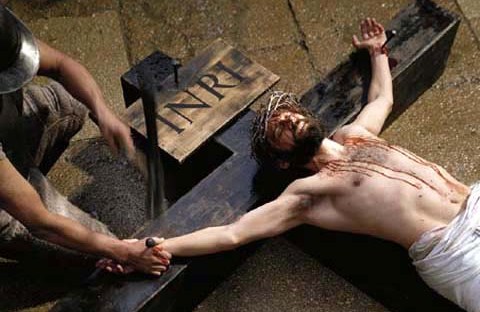
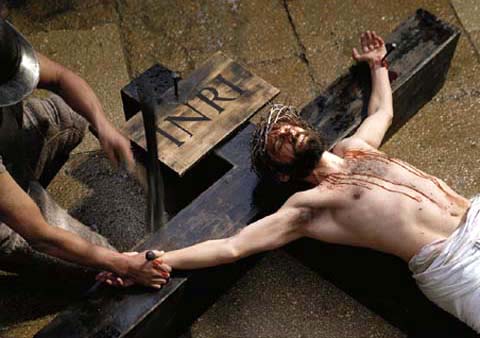
Here is a more appropriate image:

In our society we celebrate people who overcome great adversity to succeed in a task.  How much more then should we celebrate someone who overcame death?

Let me give you a few examples:

  • My Son’s Year 5 teacher went in the Melbourne IronMan event that involved a 3km swim, 100km bike ride and a 42km run.  It would be a great achievement to complete one of these legs but she finished all three.  The school community celebrated her achievement; she was a hero to all the boys in her class.  It was because the task involved difficulty that people celebrated her achievement.
  • I worked with a teacher who was planning a trip to Mount Everest.  In the training he discovered he had cancer.  He was determined to beat cancer so he could make to Everest base camp.  After months of therapy he had overcome cancer and made it to base camp.  Overcoming cancer made him a hero to many people but then going to base camp was even more impressive.  It was because he overcame difficulty to achieve his task that people celebrated.
  • We celebrate all kinds of people who climb Mt Everest.  Anyone who makes it to the top is a hero.  But if you make it to the top unassisted that is even more heroic.  When a blind person climbed Everest that was even more heroic.  It seems we celebrate people who overcome great adversity to achieve a task.
  • We celebrate people who achieve in business all the time.  Yet if someone started out with nothing then we celebrate their achievement even more.  But if someone starts out with nothing during a depression, goes through a recession and comes out successful then books are written about them.  Even in the secular world of business we celebrate people who overcome great adversity to achieve a task.

So what about Jesus? Why is that we celebrate people who overcome great adversity yet we expect God to give us everything easy or God is not faithful?  Why is that we expect God to give us everything we think we want in order to show us God is great?  Wouldn’t it be more logical to let us overcome adversity so that we feel we accomplished something?

Here is the amazing thing about God:

  1. Jesus overcomes death – if you think it is hard to fight cancer in order to climb Mt Everest how much more difficult is it to overcome death itself.  Jesus didn’t just wake up from a coma caused by the Crucifixion, he had a new body, able to walk, talk and eat.  Jesus walked a few miles on the road to Emmaus only days after dying on the Cross, this is not a simple healing but a new beginning.  Jesus overcame the greatest challenge of all and we should celebrate.
  2. God is faithful – God knows what we are like and sent his Son to die for us as a sign of God’s faithfulness.  We don’t have to overcome any great challenge to join in this victory, we have it easy because God is faithful.  We can stand before God blameless because Jesus overcame death on our behalf.  Isn’t this something that we should celebrate?

My hope is that you celebrate that Jesus overcame the greatest obstacle so that we can believe that anything is possible.  My hope is that this Good News is something that you celebrate because it is greater than any IronMan, any climb of Mt Everest or any Business tycoon.  What a great day this is.

What does Easter mean to you?  Please leave a comment.

A Good Friday reflection

Can one person really die for the sins of everyone?

It seems that when it comes to the concept of Jesus dying for our sins on the Cross, many people can’t get their head around the concept.  How could one man die for all the sins of all people? People say things like “If Jesus was God couldn’t he just say you are forgiven?”  Perhaps Jesus could have done this but I think there is more to it than that.  The Cross is a sign of a greater reality.  God could have used a different sign but instead God chose the Cross.

Jewish Background

When the Israelites were giving sacrifices to God throughout the year they would give the sacrifice on the outer altar of the Tabernacle (Exile) or the Temple (Jerusalem).  They would take an animal and place their sins on the animal then sacrifice this animal as a “payment” for their sins.

Throughout the year the Tabernacle or the Temple would be “contaminated” by the sins of all the people so the High Priest would enter the Holy of Holy’s to make a once a year atoning sacrifice to cleanse the Tabernacle or Temple.

The Jewish People in the time of Jesus would understand that one High Priest could make a sacrifice for the sins of everyone because they saw it every year.  Given that modern day Christians don’t have this sacrificial system, we may not understand this imagery.  But for the Jewish people of the day, they could believe that one man can pay for the sins of everyone.

Secular Context

Think about these few examples in our secular world today:

  • Big Business – Today when a company is found to have done something illegal or wrong, the “market” calls for the CEO to resign.  The press will wage a campaign to have someone pay the price for the misconduct of the entire company.  The CEO might send someone else to take the fall on behalf of the company but someone has to pay.  After one person has resigned it seems that people continue to do business with this company as they everything it back to normal.  When one person pays the punishment the company gets a new start.
  • Criminal system – it seems that when the media find out there is a mass murder who has killed many people that justice isn’t served until they have been locked up in gaol.  Or perhaps people want the death penalty, even in a country without the death penalty.  Even though the murdered victims will never come back again, justice is seen to have been served when one person has received their punishment.
  • Sporting teams – it doesn’t take long for fans to cry for “blood” when their beloved sporting team continues its losing streak.  In AFL crazy Melbourne people are already making accusations about certain teams and it is only week two of the season.  How often do we see fans get back onside when the coach or captain is made to resign to “start a new chapter”.  How can the loss of one key player or a coach turn around a team and yet the fans seem to have a new hope.

Perhaps you might get the parallel that I am drawing with the issue of Jesus dying on the Cross for the sins of everyone.  Even in our secular non-christian society we have examples where “Justice is served” when one person takes the fall for the sins of many.  How much more powerful then is the example of Jesus who is the God who was sinned against, taking on the punishment for the sins against him?

My hope is that this Good Friday is a time for you and your family to see that God has paid the price for our sins so that we can live in freedom.  Not just a once a year payment or sacrifice like the Jewish people believed in but a once and for all payment.  Not just a scape goat punishment like in business, criminal system or sporting teams, but full restoration in our Hope because of Jesus.

Have a blessed Good Friday.

markoffaith, mark of faith, Mark of Faith, MarkofFaith

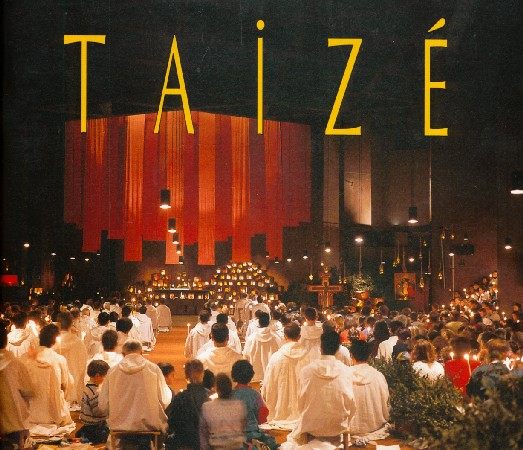
5 things I learnt from Taize

There is a small village a few hours’ drive from the city of Leon in France that has become known around the world for it meditative chants.  This village, known as Taize, has become a place of pilgrimage for thousands of young people every month.  These young people join the Religious Community in the chapel for christian prayer services seven times a day.  Its prayer style involves singing chants that repeat one line of scripture. There are also long periods of silent prayer which is not typical of what many people believe “attracts” young people.  Perhaps Taize is so counter cultural that is grabs the hearts and minds of the young people who visit.

Taize started after the Second World War as a prayer community for people from a range of cultures.  It was symbolic for a German man, Brother Rodger, to move to France after the Second World War to begin the healing process.  The prayer community soon took over the village and the centre prayer space or chapel has been expanded over the years through a serious of rooms that can be opened or close depending on the size of the gathering.

Today the meditative chants of Taize are used around the world in churches and chapels.  People will gather for Christian meditation and use Taize chants to remind them that God is always communicating.  Many communities will use Taize prayer regularly, however some people only use the chants once a year on retreat.

In the year 2000 I had the privilege of spending a few days at Taize.  After years of singing their chants in English, it was amazing to visit this place.  There are so many parts of my experience at Taize that stayed with me over the years, the biggest one being that God can use a variety of forms to reach young people.  Here are five things that Taize reminds me to consider in ministry:

  1. Simple decoration – The decoration of the front part of the original chapel in Taize is quite beautiful but it is simple.  The rest of the chapel is very basic (there are no seats) yet in this environment people encounter God.  When ever I hear people in ministry talk about needing lights, dynamic PowerPoint’s and elaborate sound systems to reach young people, I remember that Taize didn’t need any of these to help people encounter God.  Perhaps the move to make youth ministry events into mini rock concerts has not been as necessary as many would think.
  2. Simple Liturgy – One of things that struck me about prayer at Taize was that everyone transitioned between chants with ease.  How can two thousand people finish a chant together without any leader?  Some of our ministry events have become too “wordy” with an MC or service leader announcing every little detail.   When planning your next ministry event remember some of the basic liturgical principles and reduce the announcements.
  3. Volunteers – everywhere I went in Taize there were young people who would volunteer to serve the rest of the people gathered.  People would serve in the kitchen then others would volunteer to hand out the simple meals.  There were musicians who volunteered to play during the prayer sessions even if they were there for a few days.  There were a large number of volunteers who cleaned dorm rooms, showers, toilets and the chapel space.  Sometime our events have a very small team doing everything because we don’t break down the tasks.  Taize was very good at breaking down tasks to a manageable size and had people to show you how to help out.
  4. Party – After a really moving night time prayer session I remember leaving the chapel in silence, you could hear a pin drop.  As the two thousand people left the chapel many moved down to the cafe and food area.  Within in an hour there was singing and dancing many different languages.  It is important to remember that even though Taize encouraged meditation and silence, these young people had the freedom to have an unstructured party.  Remember that young people can’t be serious all the time, they need time to break out of the program into self-directed party time.
  5. Once off – whilst some people return to Taize several times, many people go to Taize only once in their lifetime.  Sometimes in ministry we are looking for a program that we can run every week for years without changing.  Taize has taught me that some great events should be used in moderation.  Perhaps in your ministry you need to consider a variety of styles and use some style once or twice a year.  Instead of the usual youth ministry event consider a counter cultural experience like Taize.

There were some forms of simplicity that I struggled with at Taize, especially the basic accommodation and even more basic food.  But there are many things which were so out of my comfort zone that they drew me deeper into reflecting on my relationship with God.  In a time where churches are moving away from doing liturgy with young people, Taize reminds me that some experiences need to be counter cultural.

So the next time you are planning to run an event for people in your church how about keeping the music and decoration simple, develop a good liturgy that doesn’t need an MC, empower people to offer their little bit as a volunteer and finish with a big party.

Please comment about how you may have used Taize in your ministry.

markoffaith.net

markoffaith, MarkofFaith, mark of faith, Mark of Faith, mrmarkmcdonald, Mark McDonald

Define your Charism not your ministry label


You only have a spend a little time in the Church to realise that there are so many labels and stereotypes out there.  If you have been a ministry leader then perhaps you have given other ministries labels or maybe you have been stereotyped yourself.  In the past few weeks I have been bombarded by all the different labels in our Church as people try to describe a particular church or ministry to me.  Here are a few labels people use:

  • Conservative or Liberal
  • Liturgical or Evangelical
  • Pentecostal or Evangelical
  • Charismatic or Doctrinal
  • Social Justice or Missional
  • Seeker Sensitive or Bible Believing

Perhaps you know of a church or ministry that could easily fit into one of these labels.  Whilst we all think that our own ministry is more rounded than just one label we tend to badge others ministries with a narrow label.  What if we were to change our thinking about how we define our ministry and the other ministries in our community?  What if we were to recognise the Mark of Faith in a leader, a ministry or a church instead of how they are different to us?

One way to do this is to define your charism not use the traditional labels that define your style of Church.  A charism is a special “flavour” given to a church, ministry or group of Christians by the Holy Spirit to build up the Body of Christ.  So we start to recognise that the Holy Spirit has given us a particular way of doing ministry to reach a particular group of people in our particular community.  We can then learn from other ministries without having to change them because they are trying to reach their particular community with their particular style.

Here are a few examples:

  1. You may not be a Hillsong Church but you may use Hillsong Music.  The Hillsong church in Sydney has been graced by the Holy Spirit with a particular Charism, their style of worship, to build up the Church.  A church that started in a community hall in North west Sydney has now produced worship music sung by millions of people.
  2. You may not be a Taize community but you may use Taize chants.  The Taize community in France has been graced by the Holy Spirit with a particular Charism, their meditative chants, to build up the Church.  A community that started in a small village has a style of prayer used by millions around the world.
  3. You may not be in a Jesuit church, school or community but you may use the Jesuit method of discernment.  The Jesuit’s, originally from Spain, have been graced by the Holy Spirit with a particular Charism, their method of discernment, to build up the Church.  A community that begin with a few men in Northern Spain has now educated millions of students in colleges and school on every continent.

I could go on but you get the picture.  We can’t try to be a church that does everything; we can’t mix Hillsong music with Taize chants because they suit different people and different styles.  However we can recognise the different parts of the Body of Christ rather than labeling ministries.

In your own leadership, ministry or church what is your Charism?  It is helpful to define your Charism by two things:

  1. What does the Holy Spirit want your ministry to contribute to the Church?
  2. Define what you stand for not what you are against.

It might be a little idealistic of me to think that we could drop the labels in the Church and see each others place in the Body of Christ.  But what we can do is remember that the Holy Spirit does not give labels to a ministry, the Holy Spirit blesses a ministry/churches with a charism for the building up of the entire Church.

How would you define your Charism?  Please leave a comment.

Two ways to start something new

At times we feel God is calling onto something new but we are not quite sure what it is.  Maybe you feel that you need a fresh idea, a new ministry, extra team members or a different job.  Here are two great stories about Peter in the Bible that teach us something about how God calls us to begin something new.

1. Jesus calls Peter to fish on the other side of the boat (John 21:6) – Peter and the Apostles have been fishing all night and haven’t caught anything.  They have gone back to their trade after the death of Jesus and they know these waters very well.  Yet an unknown man, Jesus, stands on the water’s edge and asks them to cast their nets on the other side of the boat.  They cast their nets on the other side of their boat and they catch so much fish that the nets begin to tear.

To me this is a story about beginning something new within the same boat.  Sometimes in ministry we have been tying something without much success but we don’t feel called to jump ship.  If we are to keep going within the same boat (a particular ministry or church) then perhaps we just need a new perspective for a fresh catch.  Perhaps there is a ministry within your church that has not been

producing but it is a good team of volunteers, then start something new with the same team.  This new ministry activity will produce fresh energy that could lead to growth.  Or maybe you have a good model for a ministry but you just need to inject some new people into the team.

Sometimes God calls us to stay in the boat but fish with a new perspective.

2. Jesus calls Peter to walk on water (Matt 14:27-29) – Peter and the Apostles are in a boat again, this time they are caught in a storm.  Peter is worried about their safety when suddenly Jesus comes to them walking on water.  Jesus calls Peter to get out of the boat and walk across the water to him.

Again in this story we have Jesus calling out instructions to Peter.  This time Jesus is calling Peter to leave his boat.  To me this is a story about having the faith to leave the comfort of what we know to follow Jesus into something new.

There are times in our ministry career where we have to leave our established boat (a particular ministry or church) to venture out into the unknown of a new ministry.  Just like Peter in this passage, we have to have the faith to take the initial step out into the unknown without knowing the outcome.

Sometimes God calls us to leave our boats behind and follow him.

In the first story there can be a certain amount of comfort because you know the ministry, the church or the team.  When God calls us to fish with a new perspective the challenge can be to inspire the team of volunteers to give it one more go.  The resistance can come from people who say “we have tried things before and it didn’t work.

In the second store there really is no comfort because we are called to step out into the unknown.  When God calls us out of the boat the challenge can be to have enough faith to take the first leap into the unknown.  The resistance can come from people who are scared by the uncertainty “what if we cant do it?”

Maybe it is time for you to begin something new but is it within the same organisation or are you called to leap out into the unknown.  Both stories show us that following God takes faith and courage to get something new a try.  Please leave a comment.

Sabbatical – Part 2 – Rest

When I moved cities from Sydney to Melbourne late in 2011, I planned to have at least four months off full time work. There was so much that I wanted to accomplish in my time off, but as I wrote in a previous post I wanted to see it as a Sabbatical as well. There were so many things that I wanted to do and see. I planned to go to coffee shops everyday and write, read and plan for the next phase of my life. I wanted to explore this new city, meet lots of people and build connections. Yet in just the second week into the move I got sick and had to sleep most of the week. My third week was not that productive either and I told myself it was just the colder melbourne weather. In the following weeks I got frustrated with myself for not doing enough, I thought that I was “wasting time”. This sense of wanting to “do” so much now that I wasn’t working full time would have continued had it not been for one passage of scripture:

“There remains, then, a Sabbath-rest for the people of God; 10 for anyone who enters God’s rest also rests from their works, just as God did from his. 11 Let us, therefore, make every effort to enter that rest, so that no one will perish by following their example of disobedience.” Hebrews 4:9-11

It seems that God not only rested from His good work but granted rest to those who were faithful to Him. In my plans for the four months off full-time work I had forgotten to allow for God to grant me rest. My plans were so much about continuing the work that I had done over the past 20 years of ministry. It seems that the adrenaline of doing ministry was preventing me from resting in God, which means a rest from doing the work of ministry. In order to really understand my sabbatical I had to understand rest and enter a time of sabbath rest.

There are a few things that I learnt about rest since being on sabbatical over the past four months:

  1. If we trust in God we take a break – looking back on the last few years of ministry I failed to take a break because I thought I needed to keep the momentum going. In reality I was keeping the ministry in my hands rather than handing it over to God. If we really believe that our ministry will fall apart if we take a break then we are showing no trust in God. The quickest way to burn out is believing this “season” is too busy to take a break.
  2. We need to detox from the urgent – looking back on my ministry I realised that the urgent drew me in as it is exciting. It is exciting to get into things than need to be done “right now”. Sometimes we need to see the eternity of God and detox from the adrenaline buzz of the urgent parts of ministry.
  3. We are more than what we produce – sometimes in ministry I felt that I wasn’t accomplishing anything, that the ministry wasn’t working. Yet when I look at it through Gods eyes, God was growing me as a person. God was achieving more in me than through me. Since looking back I now realise that I am more loved by God for who I am than what I achieve for His Kingdom.
  4. If God wants to achieve something, it will get done – who am I to think that God needs me or the church will fall over? There is an arrogance in the thinking that I have to achieve everything right now, perhaps I need to be more in tune with God’s timing than the desires of my own heart. Looking back over the past few months I have discovered that God’s timing is perfect, I was just too busy doing ministry to see that.

So that is just a little bit of what I have learnt since being on Sabbatical. In the past four months I haven’t been to as many coffee shops or done as much writing or built as many projects as I thought I might, but God has strengthened me through the sabbath rest that He has granted me. Looking back I see this past four months as a great blessing.

Whilst I have learnt these few things I am still not out of the woods. The challenge is to implement what I have learnt when I get back to work and back to ministry. In the coming months I will begin the real difficult time of trying to regularly enter sabbath rest when ever ministry gets “busy”. My one encouragement for you and for me as life gets busy is to take a weekly sabbath rest. Perhaps it can’t be Sunday as you are working, but find some time in your week to stop doing and listen to who God is helping you to be.

Please leave a comment on how you have rested during the busy times in ministry. What do you do to relax and enter into God’s rest?

Discipleship is like a Christmas tree

This week I was looking through all the Christmas catalogues that landed in my mailbox.

One major department store were advertising a beautiful Christmas tree for $27 dollars. The picture of this $27 Christmas tree was amazing; it was so beautiful that it made me want one in my house. My second reaction was “how can a tree that beautiful be worth $27?” Then it hit me that this tree would have had over $200 of ornaments, lights, tinsel and other decorations on it. The picture of the $27 dollar Christmas tree I was looking at was really worth about $227.

When you think about a Christmas tree,

it looks rather plain without any decorations. Yet if you had the beautiful decorations but no tree, then all you would have is a pile of decorations. The tree is the major element and the decorations are the extras; you need the tree to hang everything on. The same is true with discipleship; we need something to hang everything off. Let me explain.

Just like in the Christmas tree example, the key to element to discipleship is our relationship with Jesus. Without a relationship with Jesus there is no discipleship. We can get so distracted by the “lights and tinsel” that we forget the core element. We can think that if we have the extras then our relationship with Jesus is secure; in reality that may not be the case. Sometimes we need to strip back the extras to see what is really lying underneath it all.

In the case of the $27 Christmas tree, I am sure once you take the $200 worth of decorations off it isn’t the best looking tree. When you strip back all the extras in your spiritual life what does your relationship with Jesus look like? Is it something that you would be proud to show off to the world by itself or do you want to put all the extras back on? Some of the extras that could distract you from the core relationship with Jesus could include:

  1. Attendance: sometime we think the more we attend Church the more we love Jesus. See Attendance vs Commitment
    for more details
  2. Friends: sometimes we think that if we hang around lots of other disciples that makes us a disciple; discipleship through association.
  3. Routine: sometimes we think that if we fill our routine with spiritual exercise that will makes us more of a disciple, we might be busier but do these exercise fill our time or draw us closer to Jesus?

As a person with the Mark of Faith on your life, sometimes you have to strip back the extras to show others the core element of that faith; your relationship with Jesus. Please leave a comment.