
3 steps of an engaging presentation

What does a scenic flight in an aeroplane have to do with presentation skills?  If you reflect on the three stages of giving a presentation, there are a lot of similarities to an aeroplane flight.  There is usually a starting point to any flight the same as there is always an introduction to any talk, speech or presentation.  There are usually a couple of points of interest in any scenic flight, and in any presentation there should be a few points of interest too.  Every scenic flight must come to an end as should a good presentation.

Have you ever heard a talk that never really grabbed your attention?  Perhaps the introduction never got off the ground.  Or perhaps you have heard a talk or speech that went on and on and on; they didn’t know how to “land it”.  So here are three simple tips for giving a great presentation in your ministry setting using the image of an aeroplane flight:

1. The Take off:  When an aeroplane is getting ready to take off it uses the most amount of energy of the entire flight.  When you begin your presentation you will have to use a lot of energy to get the attention of the audience.  If you loose people in the take off you may not get them back, but they are stuck listening to you.  Even if you know your topic really well, you must give some thought to your introduction.

How you can kick off your presentation?

2.  Cruising: when an aeroplane gets into the air it aims for its cruising altitude and then turns down the engines to cruising speed.  An aeroplane doesn’t fly at full speed for the entire flight but cruises at an efficient speed.  In the cruising part of your presentation you might have to come off the energy level a little.  People can’t keep their energy up for the entire presentation so adapt the pace in the middle section.  Just like an aeroplane flight there are usually only two or three points of interest.  In your middle section don’t confuse people with 10 or 15 key points.  You want two or three key points that get you to your destination but add interest along the way.

What are the 2 or 3 key points of your presentation?

3. The Landing:  when an aeroplane takes off it knows where it is going to land.  A long “holding pattern” before landing can be hard for the passengers.  When you are giving a presentation you must know how you are going to land or finish before you begin.  What is your final destination, what is you final point?  Keeping the audience wondering when you are going to finish is not a good idea.

How are you going to finish your presentation?

These are three really simple stages to any presentation.  There is one more thought to add using the aeroplane analogy:
How many planes can a pilot fly at once? 
A pilot can only fly one plane at any given time.  So too you should have one only one key theme each time you present.  Some people will get up and talk for the allotted time, packing in as many themes and topics as they can.  Apart from confusing the audience, each theme is undervalued because it is not explored properly.
So the next time you are giving a presentation, preaching at church, giving a talk to young people or sharing the vision for your ministry remember the key stages:
  • fly one plane (theme)
  • give energy to the take off (introduction)
  • have 2 or 3 points of interest while cruising (body) and
  • nail the landing (conclusion)

markoffaith, MarkofFaith, Mark of Faith, mark of faith, mrmarkmcdonald, Mark McDonald, markoffaith.net


Youth Ministry and the disposable razor theory

We all know that young people are growing up in an era where new consumer products launch or are updated on a constant basis.  With the launch of the iPhone 5 last week there will be millions of consumers desperate to get of their current phone contracts just so they can have the latest phone.  In the current marketplace we see many good products relegated to the scrap heap every month just because the latest version is released.  We can trace all of this back to the theory of the disposable razor.

Traditionally a man would buy one high quality razor to shave their face every morning.  The good blades would last a lifetime, which the manufacturer thought was bad for business.  It was in the interest of the manufacturer to make blades that needed replacing so that people would have to buy more product.  Thus the creation of the disposable razor blade; a company would make more money over the long term selling thousands of cheap items than selling one high quality razor.

Fast forward through the years and we see that many products lowered their quality so that people would have to buy more products.  Many products developed component parts that needed replacing so as to sell more products; before digital cameras Kodak made more money from selling film than they did by selling cameras.  The disposable razor theory originally applied to low cost and low quality items.  In recent years the disposable or replaceable concept has been getting more and more expensive. What do people do with their old mobile phone when they buy the new iPhone 5?  When did a $700 phone become as disposable as a $2 razor blade?

Young people today want the latest technology which is totally understandable.  If I needed to buy a new phone or laptop then I would buy the best I could afford too.  However, the rate of change in consumer products is creating a transient culture where young people move from product to product without much loyalty.  Whilst the disposable razor theory was always about products it seems that it is now affecting organisations also.  Sporting clubs find it harder to keep junior players for more than a few seasons.  Scouting groups find it hard to attract young people because it asks for a weekly commitment rather than random participation.

In the Church we too are affected by the transient culture emerging in young people.  The Church is just one organisation dealing with the rate of change in our culture.  Perhaps like some other organisations we have been caught out ‘selling’ the same products in a marketplace that wants change.  If young people update their phone every two years, is it unreasonable to think that they expect some change in their church experience every two years?  If the fashion and music scene changes every six months is it unreasonable to think that young people might expect the look and feel of their church experience to change every six months?

I don’t think anybody ever thought that the disposable razor theory would ever apply to the Church, is it possible that this is what we are now seeing in youth and young adult ministries?  Is it possible that young people are so used to the rate of change that they expect change all around them?  So what should we do about this in our churches and ministries? If we look at Apple, they win the customer by changing the product.  We can’t change the Gospel, but that is not the ‘product’ that we are selling.  We are selling programs and activities in order to win people to Christ.

In our ministries, perhaps we should think about the packaging of our message and line up some ‘disposable razors’.  Here are a few examples:

  • A short course on a topic that is the hottest issue within the community
  • A few camp options within the year from overnighters to week long camps.
  • Opportunities to visit other churches for guest speakers or worship nights
  • Change the theme every school term
  • Have two to three options for high schoolers rather than one youth group for Year 7-12.

Yes this is harder for the youth and young adult ministry but can we really bury our head in the sand and keep everything static?  If we don’t make our programs the disposable razors the risk is that Jesus becomes the disposable razor and young people move onto another spirituality.  We can keep doing what we have always been doing or we can decide to work with young people as they are developing.

My hope is that together we can improve our ministry to youth and young adult to see more ‘customers’ being won to Christ.  If Apple are able to keep winning loyal customers then surely we need to as well, perhaps we need to be a bit more thoughtful in how we can win loyal followers of Christ.

Please leave a comment

Mark McDonald, mrmarkmcdonald, markoffaith, MarkofFaith, Mark of Faith, markoffaith.net

Ministry is like herding sheep, cats and sheep dogs

Recently I attended a conference session with Tim Hein which explored stages of faith development.  Whilst there were many complex elements to the presentation, a fun image that Tim used was the image of ministry as the art of herding.  So I thought I would share a quick overview with you:

  • Youth Ministry is like herding sheep – young people naturally want to run together as a herd.  There will be differences within a group but they tend to follow each other.  Young people like the stability of the herd and so are happy to go along with the routine.  Leading a youth ministry can seem difficult but it doesn’t have the complexity of Young Adult Ministry.  The challenge is to introduce complexity so that when they make the transition out of following the herd they know how to handle it.
  • Young Adult Ministry is like herding cats – young adults naturally want to explore their uniqueness.  Being a young adult is about testing out the boundaries, exploring the complexity of life and finding your unique place in the world.  Therefore ministry with this age group can end up with people heading in all sorts of directions.  As a young adult minister you can try to herd the cats but you will get a few scratches along the way, see the video below.
  • Adult Ministry is like herding sheep dogs – adults in the church need to run free because they are their own person but they can be roped in to help with the mission of your church.  Sheep dogs don’t need fences because they naturally stay on the farm; adults will naturally come back to church.  Sheep dogs don’t own the farm and the challenge with adults is to remind them they don’t own the church.

Some of these thoughts were my spin on what Tim was saying, his presentation was far more detailed than this.  I really liked this image because it seemed to resonate with the room, does it resonate with your experience?  Check out the funny video below then leave a comment explaining the image that you use for ministry.


markoffaith.net markoffaith, mrmarkmcdonald, mark mcdonald, Mark McDonald, Mark of Faith.

What the Church can learn from Downtown Abbey

There is no doubt that the period drama Downtown Abbey has taken the world by storm.  Not only has series one and two been very successful but with the production of series three under way, people can’t wait for more.  The success of a Edwardian period drama during an economic downturn could be understandable as it takes us back to a world that no longer exists.  It helps those of us watching the show to imagine a life when there was more order than our post modern times.  But there is one key lesson that the Church should learn from the success of Downtown Abbey:

As successful as the period drama has been, people are not hiring footmen, dressing for in black tie for dinner or going back to the ‘good old’ days.  The success of the show is not changing lives.

I must admit that I am a late adopter of the show.  Whilst others were hooked from the very beginning, I have caught up on the craze through the DVD’s.  I love the show, especially the drama that goes on downstairs.  Perhaps we all wish that we were the privileged few who live upstairs, but in reality I would have been a lower middle class person living somewhere in town, never even seeing Downtown Abbey.

But here is the thing, as much as I like the show, I haven’t hired a butler or starting wearing black tie for dinner or even setting the table.  I admire the show but it is not my real life.  The pomp and ceremony is attractive but I know that it is not real life.  The same is true with the Church, I love the ceremonies and special occasions but the Good News of the Gospel is more than ceremony for me.  If I have learnt anything about church ministry I know that people love special occasions but they desire for the Gospel to touch their ordinary life.

The parallel between Downtown Abbey and the Church is a long bow I admit.  But if those of us in ministry think that a Period Drama which touches our longing for another era is a sign that people want to a return to a ceremonial church then we are mistaken.  If anything it shows us how far things have come.  We only have to look on the web to see that social networking and new media are present realities that the Church is facing.   People must not long for a return to some golden era of the Church but look forward to how we can contextualise the Gospel in our post modern secular world.

People will always love ceremony and special occasions in our churches just like some of us look forward to an hour or two of Edwardian life on our television sets.  Whilst some might seek relief from our post modern world through the old fashion church rituals, the Gospel is meant to be our entire life, not a few hours of relief each week.  We can’t continue to portray the Church as a world that no longer exists, the same way that the world of Downtown Abbey no longer exists.  The challenge is to make our own real life part of God’s bigger drama.

Please share your thoughts below.

mrmarkmcdonald, markoffaith.net, mark of faith

Does your ministry have the X Factor?

Let me start with two stories:

  1. Megachurch – one Sunday I attended a the evening service at a “megachurch” to hear a speaker that they had flown in from the United States.  With great facilities, an awesome worship team and a special preacher I knew the night would be great.  When I entered the Church I was touched by the warmth and buzz amongst the people, everyone was so friendly.  By the time I took my seat at least 20 people had greeted me.  When the worship started it was amazing, not just because of the show (as the critics like to call it) but these people were passionate about praising God.  After an amazing sermon I left on a real high.  When I got home my wife asked me “how was it?”  I replied “they really have it, something amazing is happening in that church.”
  2. Small Church – one Sunday night I attended a small young adult ministry with maybe 20 people.  The space was a borrowed venue and didn’t really work for the group.  When the service started the mood in room changed and this small group of people seemed to be doing something big.  It felt like the service was part of God’s bigger plan for His Church.  When I left there I thought that the small group of young adults really had something, they had it right.

Sometimes we can walk into a ministry as a guest and sense something straight away.  Perhaps you get a positive sense from the minute that you walk into the room or maybe when you meet the people.  Often it doesn’t have to do with the physical space but what seems to be happening spiritually in a ministry.  Some people call it the “X factor” and Craig Groeschel uses the term “it”.  Some people have “it” and other people don’t have “it”.

Would your ministry as it stands now have “it”? Does your ministry have the X Factor?

Sometimes we fall into one of two pitfalls about our ministry:

  1. Why do they have it?  We look at the church up the road or in the next suburb and envy what they have.  We look at their bigger numbers or bigger budgets or bigger facilities and wish we had what they have.  We think that it is what they have that makes them better and it is what we don’t have that makes us struggle.
  2. Why don’t they have it?  We can look at the church up the road or in the next suburb and wonder why they are struggling.  “It is so easy” we tell ourselves and we think the other churches just doesn’t get it.  We think it is what we have that makes us better and we judge them by what they don’t have.

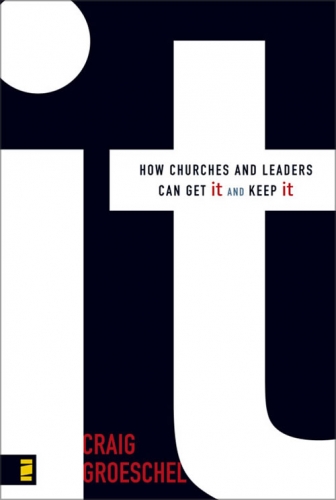
In his book “It, How Churches and Leaders can get It and keep It”, Craig Groeschel reminds us that every church has the Holy Spirit.  However some churches are able to take what God has given them and make it spectacular.  It is the same with musicians who have the X Factor; anyone can play music but some singers have that extra something that sets them apart.

So here are six suggestions, based on Groeschel’s book, on how to get it and keep it:

  1. Vision – without a vision a group will perish.  The same is true with your ministry.  If you want to get it, the X factor, then you have to know where you are heading and why.
  2. Divine focus – Groeschel suggests that if you chase two rabbits you will miss both.  If you want your ministry to grow then you have to narrow the focus.  Ask God for divine inspiration about what your ministry should really focus on.
  3. Camaraderie – those ministries that have it, the X factor, have a friendship that draws you in; you want to be a part of their group.  It is important to be serious about sharing life together and having a lot of fun together as well.
  4. Innovation – these ministries with it, the X factor, don’t make excuses as they find a way to do ministry with what they have.  God often directs by what He doesn’t provide.  Turn what you don’t have into an opportunity and a strength.
  5. Failure – Groeschel says that failure is not optional, it is essential.  Those ministries that have the X factor try things and are prepared to fail in order to be effective.  When a ministry plays it safe you can tell and people don’t join ministries that stagnate to play it safe.
  6. Outreach – ministries that have it, the X factor, don’t want to keep it a secret they want everyone to know.  These ministries will reach out into their community rather than looking to keep their current members happy.

The most important thing to remember is that it is not about the building or the budget.  In his book Groeschel says that the days when his church met in a double garage with no money were some of the best ministry they did.  When a church gets better buildings and resources it can think that it can buy its way to success.  The Holy Spirit can’t be bought, it comes to those who believe the Gospel and have a heart for sharing this Good News.

My prayer for you is that your ministry can get IT, the X factor.  And if you have the X factor my hope is that you can share it around because there are a lot of ministries that would like some.

———-

For a sample of the “It” talk by Craig Groeschel at the Global Leadership Summit click here.

markoffaith, mark of faith, Mark of Faith, MarkofFaith, markoffaith.net

Where are you heading personally? Vision Part 2

In a previous post I wrote about where are you heading in your ministry.  Whilst it is important to steward your ministry well, most of us won’t stay in the same ministry our entire life.  So how do you work out a vision and direction for your life that fits into what God is doing within the ministries that you are planted?

When I was younger I thought my youth group was the best thing I had ever done.  Every Sunday night I would go to Church, during the week we would catch up, I would write talks, help out with meetings and do whatever was needed.  After three years of giving everything I had to this ministry I started to see life after the youth group.  It was like I grew out of the youth ministry as I grew older and I needed to move on.  Since then I have seen the same pattern repeat itself within every ministry I have served in; it is just the length of time that changes.  Sometimes it is six months sometimes three years sometimes 10 years.

In your life have you seen this pattern in ministry:

  1. Discover a new ministry
  2. Soak up everything you can from the group
  3. Devote everything you have to the ministry
  4. Pass on everything you do to other leaders
  5. Move onto the next phase of your life

It is Ok to spend a season in a ministry and move on.

The challenge for us is to be guided by what God is calling us to rather than drifting from ministry to ministry.  If you are going to stay in ministry long enough to contribute, you have to go through a period where it may not be as enjoyable as when you first started.  If you leave a ministry when ever it is no longer enjoyable then you are not moving by God’s call but by your own desires.

Here are four things to help you determine where you should be heading personally:

  1. What is your calling?  Your calling doesn’t usually look like a job description.  It isn’t often that your life’s call is Year 12 Geography teacher at Summer Bay High.  Your calling is some way that you will make a different in the world so describe it in unique ways.  Your calling is most likely not just the things that you are good at but the things that make you stronger as a person and as a disciple.  Your calling will never draw you away from God but will help you build God’s Kingdom in a special way.
  2. What season are you in?  You may be in a season of growth; you may need a season of rest.  You need to reflect on what season you are in because God may be asking you to sow into a particular ministry for a particular time.  If you feel you must commit somewhere for the rest of your life then you may miss the opportunity to sow into a great ministry for a short period of time.
  3. What are you preparing for?  Are you developing your craft for a future season?  We can be so focused on what we are doing now that we forget we need to be preparing for what is next.  This might be further study, it might be connecting with mentors who are at the next level, it might be reading more books or developing your platform.  Even if you are in a season of great productivity you should be preparing for the future.
  4. What is your life’s work?  Sometimes you need to imagine how you will view your life after you retire.  Whilst most of us have no idea about every single job that we will hold in our life, it is important to focus on what significance your life will make as a whole.  Some people will have three or four ministries throughout their life others will serve in 10-15 different places.  What difference will your life make as a whole in the Kingdom of God?

Whilst this might sound focused on you, I really believe that we have to let God be God.  We have to constantly be asking God how can I serve you?  It is not our vision but God’s vision that we should be following.  If you are heading nowhere in your life then you will get there.  If you want to be heading in the right direction then you have to be looking to God.

markoffaith, mark of faith, Mark of Faith

Where are you heading? Vision Part 1

Andy Stanley wrote that the end of a God ordained vision is God.  So if you are heading towards a vision then you want to make sure that it is God ordained.  You want to make sure that you are doing what God created you to do with your life, in order that you can come closer to God.  The reverse would be true as well; the end of your vision is you, because it is you that set the direction and it is you that chose what was important.

In ministry we can often get lost in a minefield of vision, which is ironic because vision should be crystal clear.  The reason that we get lost is because we don’t know whose vision to follow:

  • Senior Minister – any Senior Minister has their own reason for being in ministry and they have the greatest say over what is seen as important in your church.
  • Elder’s board or church Council – are the church leadership team really discerning God’s ordained vision for your church or is it vision by consensus?  Sometimes church boards are made up of people who are just “helping out” and have no clue what God wants for their church, other times a church board is filled with the most gifted people.
  • Finance Committee – a good finance committee works out how to achieve the vision that God has ordained, yet in some churches the Finance committee determines what vision the church can afford.  If God ordains the vision then God will provide, don’t settle only for what you can afford.
  • The Ministry – we often are look for the new vision for our ministry as though it is separate from the vision that God has for our Church.  Don’t let your ministry be heading in a different direction from the rest of your Church.

So how do you know which vision to follow?  We know from scripture that people without a vision will perish so which one do we pick?  It is important to reflect on these key things:

  1. Branding is not vision – sometimes we rush into a vision statement because we need to brand our ministry.  A good vision can take at least six months to discern, most likely it will take around 12 months.  A vision is going to set you heading in a particular direction for the next ten years where as your branding will only last 2-3 years at best.  If you like a particular style of marketing or branding then run with it but don’t confuse branding for vision.
  2. You are not your ministry – it is important for you to separate your own personal vision from that of your ministry.  God wants you to do something with your life that may be different to what God wants from the ministry you serve in.  In reality the ministry should keep going long after you have left the position but God still wants you to build the Kingdom even though you move onto the next position.  Don’t confuse what you want to do with your life with where God is calling the ministry to go.
  3. Ministry has its season – perhaps you don’t know where your ministry is going for the next ten years but you can discern where you are heading for the next season.  In youth ministry it is sometimes difficult to have a vision beyond five years.  In University ministry students move on every 3 years so a vision must accommodate each season being quite short.  If you are called to lead for a season then pursue the vision as best you can and leave God to work out the next season.
  4. Ideas come with a strong vision – when you have a strong vision of where you are heading over the next 10 years then usually you are full of ideas.  People who run out of ideas are either run out of vision or are heading in the wrong direction.  One church used the phrase  “no rowing ministry” to describe when the wind has changed direction but we row the boat where we want to go.  If your vision is God ordained then the ideas will come.

A practical example

There was a Church that started a youth ministry by asking the young people what they wanted.  The answers that the young people gave were passionate and exciting but they were all ideas of things they could do rather than a vision of where they were heading.  The leaders called me after six months to say they had run out of ideas.  When I asked them about their vision they clearly didn’t have one; they only had a list of ideas for fun youth nights.

After focusing them on discerning a vision and asking them to think about where they were heading they came up with a list of what they wanted young people in their ministry to be like.  In the end they clarified a vision around helping young people to know Christ.  Over a year later they were still going strong and they were developing more leaders and they were full of ideas.  Where there was no leadership towards a vision the group almost collapsed but when the leaders had a strong vision of where they were heading then the group thrived.

So where are you heading?

markoffaith, MarkofFaith, Mark of Faith, mark of faith

Facebook Friends

Facebook friends can be “real” friends

Facebook FriendsIf you have ever heard someone comment about how many friends they have on Facebook, almost straight away someone else will say “but none of them are real friends”.  There is an assumption from many people that Facebook is not a “real” way to maintain a friendship.  Whilst this might be true for an older generation, the reality is that most young people do see their relationships on Facebook as real friendship.  Usually it is the people who are not on Facebook that under play the important role that social networking plays in maintaining friendships.

So consider for a minute what it might take to maintain a “real” friendship.  Would you consider these situations to be real friendships?

  • Pen Pals: for centuries there has been great prestige in being pen friends.  In many cases the people never meet face to face.  Whilst your grandmother may consider her pen friend more of a real friend than your 500 Facebook friends does it make it true?  Can you develop a real friendship without ever meeting face to face?
  • Long distance friends: people often move interstate and catch up with their friends when ever they are back in town. Some people think these are real friends compared to Facebook friends even though they don’t see them regularly.  Can you maintain a real friendship seeing someone face to face only once or twice a year?
  • Life long friends: some people who are cynical about the role of Facebook in maintaining a friendship reference their life long friend as the bench mark of real friendship.  Whilst they may have built the friendship over decades they maintain this friendship with as little as one or two events a year.  One of my colleagues lives in the same city as his friend but only sees him once a year at Christmas, another colleague sees her life long friend once a year because they are both so busy with their new lives.  Is real friendship based on longevity or how often you communicate?
  • Family:  all of us know that blood is thicker than water and yet we all have family members who we only see at Christmas, Weddings or Funerals. Sometimes we don’t see our family as much as we should.  Is a real friendship based on an established connection?

Think about the young person who is on Facebook every day catching up with what is happening in the lives of their 500 friends.  They know what is happening every day or two with their close friends, workmates, classmates, long distance friends, life long friends and family.  Compare this to the “real” friendships that Facebook objectors are maintaining through as little as one or two face to face meetings per year.  Before you think that I really think all Facebook friends are real friends I don’t, but my point is that many teenagers that we work within youth ministry do.  It is not appropriate to dismiss Facebook as a valid way that young people maintain friendships.

So here are four ways to use Facebook to maintain friendships with people in your ministry:

  1. Watch and listen – people will say and type things on Facebook that they don’t share in person.  If you want to know what a person thinks about then study what they do and say on Facebook.   In ministry you have to be careful not to raise Facebook activity in public forums but you can raise things in conversations with the person face to face.  For example, “I saw that you visited ……. For a holiday, what was it like to be there?”
  2. Comment – it can be seen as Facebook stalking if you read everything but never comment on posts.  Whilst we are tempted just to click “like” make the extra effort to write a comment.  Write something extra to show that you are not just gathering information but that you are developing the relationship.  In the last year or so people are engaging less and less in comments so try harder to make a comment or two.
  3. Groups – the benefit of creating groups is that you can start to link people who may have a similar interest but never meet face to face.  Be clear about what a group is about and don’t get offended if people don’t join your group.  You don’t want lots of group members, you want group members who engage in the conversation.
  4. Birthdays – it used to be so hard to maintain a birthday list, hours of asking each individual, now Facebook reminds you every day who’s birthday it is.  So there is no excuse for not making a comment on a person’s page for their birthday.  Yes it is not as good as a face to face present but it is better than hearing nothing for your youth minister.

So whilst we might not think Facebook friendships are the real deal, in youth ministry don’t dismiss the fact that young people see it as the real deal.  In fact if you start to use social networking more effectively in your ministry you might find it easier than ever to be influential in the lives of the people you’re trying to minster to.

If you disagree with this concept or you have a warning about using Facebook in ministry please add a comment below.  I understand that this post isn’t the definitive guide to using Facebook in ministry but I hope it helps you in some way.

markoffaith, Mark of Faith, MarkofFaith, mark of faith

Four types of breaks you need to take

There are many reasons to take a break from ministry to recharge the batteries and clear your head.  If you know the purpose of your break before you depart then you will enjoy your time off and come back feeling refreshed.  If you are unclear about the purpose of your break then you feel frustrated and you will return feeling as tired as you were when you left.

Whilst you may not have time to take weeks off, you can take a short break over a weekend or take a few days off mid-week.  Here are four types of short breaks that you may take from ministry over a few days or even a week:

  1. Clean up – whilst this may not be everyone’s favourite break sometimes you need to take a break from ministry to clean up and take stock.  If this is the type of break you are seeking then you will be most happy tucked away in your workspace with no distractions.  Some people like to go through their work space or files to clean up months worth of clutter.  A short clean up break will help you clear your mind at the end of busy time or to prepare for a new season in the ministry.  People often take this type of break in late December or early January, but perhaps there is a better time of the year for you to take this break.
  2. Rest – perhaps you are running on empty and you could do with 15 hours of sleep.  This won’t be a very productive break so you need to prepare to get nothing done.  Some people take time off to rest then fill their days with cleaning or visiting friends then wonder why they still feel tired at the end of the break.  If you are run down and tired then sleep in each day and take an afternoon nap.  It can also be helpful to do some exercise in the afternoon to help get the blood flowing and oddly this will help you sleep better at night.  It is important to watch what you eat when you are resting and stay away from heavy foods and caffeine.
  3. Visiting – sometimes you go through seasons when you don’t see anyone outside your ministry, then you are in need of a visiting break. Take a break to catch up with friends and family.  Unlike the resting break, if you are visiting friends then you will fill your day with appointments to see people.  Unlike the person who has shut themselves away to declutter, you want to get out and see people.  You will get energy from other people but avoid people who connected with the ministry.  Perhaps you need to turn off your ministry mobile and focus on the conversations of the people in front of you.
  4. Get away – every once in a while we need to escape by going away.  Some people have found that they never fully switch off if they are in the same city as their ministry, others the same state as their ministry.  Some leaders need to get away to a different culture so that it highlights the environment that they minister in.  If this is your need then it is a little more expensive so save those penny’s.  Perhaps there may even be someone in your ministry that owns a holiday home, caravan or tent.

Whilst you might tend to spend your holidays doing one of these types of break, we actually need all four types of breaks within our annual calendar.  If you balance your time throughout the year across all four types of breaks then you will feel refreshed and prevent burn out.

Michael Hyatt has a podcast and article where he talks in more depth about knowing the purpose of your vacation, which would also be helpful to check  out.  Michael outlines a few important steps before you leave on a break which I encourage you to look at.

If you have any tips on taking a break please share your ideas with other by leaving a comment in the area below.

markoffaith, mark of faith, Mark of Faith, MarkofFaith

Creating a big impression at Church

Creating a Big impression at Church

Creating a big impression at ChurchThere are occasions in every Church calendar when the leadership team want to create a big impression.  Perhaps it is an outreach event, a new members night, Back to Church Sunday or the first night of an Alpha Course.  Whilst we can’t create a big impression all the time, there should be one or two events every year that really create the big impression to visitors.  Whilst we all look for shortcuts to creating a big impression, the reality is that a big effort creates a big impression.  In a world where everyone is bombarded with excellence, people are still impressed when an organisation makes an effort to impress.

For example this week I have been taking my boys along to our local church holiday program.  As we walked to the church on day one, I was expecting the boys to have a good day with other kids from the area.  When I arrived at the church the entire foyer was decorated with a jungle theme including hand made vines hanging off the rafters.  There was a welcome team that opened the front door for us and showed us how to register.  By the time I had dropped my boys off, they were so impressed by the foyer that they were expecting a great day.  The foyer experience had created a big impression on me and my boys.

Michael Hyatt suggests that the “Wow Factor” is created when an organisation goes beyond our expectations.  In other words to create a big impression an organisation has to go beyond the effort that people are expecting.  But there are some guideline to remember when creating a big impression so that you don’t burn out your team:

  1. Cut back  – it might seem odd to suggest that you cut back on events in order to create a big impression at Church but you can’t do everything.  Your team will have to decide on what they will stop doing in order to create the time and space needed to put in the big effort required to create the big impression.  Perhaps instead of doing 10 events that require a lot of effort you could scale back to three or four big impression events.  Some churches have cut back from holiday programs every term so they can put the effort into one big annual holiday program.
  2. Beg and Borrow – no ministry has the budget to do everything they want to do, so think about low cost ways to create the big impression.  One ministry drove a car into the church foyer to create the wow factor for a father’s day event, another church put a king size bed on stage for an event on Marriage (both items were owned by church members).  Think about items that you can get or borrow for free and then use them in interesting ways.
  3. Centre piece – if you do have the budget for decoration, then spend it on the focal point in the room.  When people are sitting or standing for the longest part of your event where will they be looking?  This focal point is where you can spend your money and biggest effort.  You don’t want to spend money on the foyer if the participants will spend 3 or 4 hours looking at a blank wall behind the guest speaker.  However if you are after positive first impressions then what will a guest see first?
  4. Recruit Volunteers – having lots of volunteers will make it much easier to set up and pack down.  We often forget how much effort it takes to pack up the event at the end, so organise the pack up team before you start.  The more volunteers you have to make things before the event the less you will have to spend on items made by someone else.  For example Conference bags are a standard item that create a big impression if it is full of useful items rather than just a pen and blank paper yet it can take hours for volunteers to stuff 100 conference bags carefully.
  5. Invite people to the event – if you are going to spend time and money on creating a big impression then you want people not just to see it but experience it.  You need to spend as much effort on inviting people to the event as setting up for the event.

It is often said that “Excellence honours God and inspires others” and yet this takes a lot of effort.  If you want to create a big impression it is going to take a big effort.  After reading this post perhaps you need to lead your team to think through the rest of  annual calendar to choose one or two events that are going to get the big effort and which events won’t require as much effort.

You might also like to read about creating excellence at Church

Also please leave a comment about how you have created a big impression at your Church.

markoffaith, Mark of Faith, mark of faith