5 things I learnt from Taize

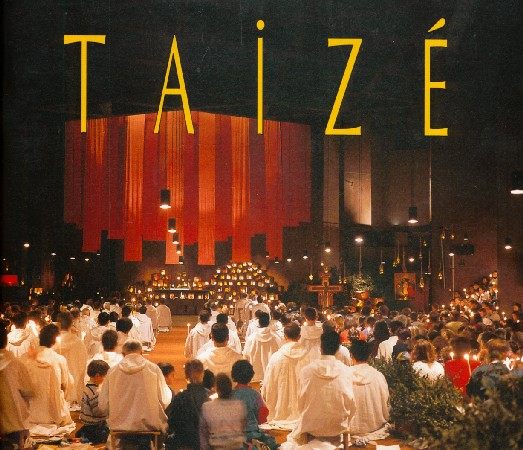
There is a small village a few hours’ drive from the city of Leon in France that has become known around the world for it meditative chants.  This village, known as Taize, has become a place of pilgrimage for thousands of young people every month.  These young people join the Religious Community in the chapel for christian prayer services seven times a day.  Its prayer style involves singing chants that repeat one line of scripture. There are also long periods of silent prayer which is not typical of what many people believe “attracts” young people.  Perhaps Taize is so counter cultural that is grabs the hearts and minds of the young people who visit.

Taize started after the Second World War as a prayer community for people from a range of cultures.  It was symbolic for a German man, Brother Rodger, to move to France after the Second World War to begin the healing process.  The prayer community soon took over the village and the centre prayer space or chapel has been expanded over the years through a serious of rooms that can be opened or close depending on the size of the gathering.

Today the meditative chants of Taize are used around the world in churches and chapels.  People will gather for Christian meditation and use Taize chants to remind them that God is always communicating.  Many communities will use Taize prayer regularly, however some people only use the chants once a year on retreat.

In the year 2000 I had the privilege of spending a few days at Taize.  After years of singing their chants in English, it was amazing to visit this place.  There are so many parts of my experience at Taize that stayed with me over the years, the biggest one being that God can use a variety of forms to reach young people.  Here are five things that Taize reminds me to consider in ministry:

  1. Simple decoration – The decoration of the front part of the original chapel in Taize is quite beautiful but it is simple.  The rest of the chapel is very basic (there are no seats) yet in this environment people encounter God.  When ever I hear people in ministry talk about needing lights, dynamic PowerPoint’s and elaborate sound systems to reach young people, I remember that Taize didn’t need any of these to help people encounter God.  Perhaps the move to make youth ministry events into mini rock concerts has not been as necessary as many would think.
  2. Simple Liturgy – One of things that struck me about prayer at Taize was that everyone transitioned between chants with ease.  How can two thousand people finish a chant together without any leader?  Some of our ministry events have become too “wordy” with an MC or service leader announcing every little detail.   When planning your next ministry event remember some of the basic liturgical principles and reduce the announcements.
  3. Volunteers – everywhere I went in Taize there were young people who would volunteer to serve the rest of the people gathered.  People would serve in the kitchen then others would volunteer to hand out the simple meals.  There were musicians who volunteered to play during the prayer sessions even if they were there for a few days.  There were a large number of volunteers who cleaned dorm rooms, showers, toilets and the chapel space.  Sometime our events have a very small team doing everything because we don’t break down the tasks.  Taize was very good at breaking down tasks to a manageable size and had people to show you how to help out.
  4. Party – After a really moving night time prayer session I remember leaving the chapel in silence, you could hear a pin drop.  As the two thousand people left the chapel many moved down to the cafe and food area.  Within in an hour there was singing and dancing many different languages.  It is important to remember that even though Taize encouraged meditation and silence, these young people had the freedom to have an unstructured party.  Remember that young people can’t be serious all the time, they need time to break out of the program into self-directed party time.
  5. Once off – whilst some people return to Taize several times, many people go to Taize only once in their lifetime.  Sometimes in ministry we are looking for a program that we can run every week for years without changing.  Taize has taught me that some great events should be used in moderation.  Perhaps in your ministry you need to consider a variety of styles and use some style once or twice a year.  Instead of the usual youth ministry event consider a counter cultural experience like Taize.

There were some forms of simplicity that I struggled with at Taize, especially the basic accommodation and even more basic food.  But there are many things which were so out of my comfort zone that they drew me deeper into reflecting on my relationship with God.  In a time where churches are moving away from doing liturgy with young people, Taize reminds me that some experiences need to be counter cultural.

So the next time you are planning to run an event for people in your church how about keeping the music and decoration simple, develop a good liturgy that doesn’t need an MC, empower people to offer their little bit as a volunteer and finish with a big party.

Please comment about how you may have used Taize in your ministry.

markoffaith.net

markoffaith, MarkofFaith, mark of faith, Mark of Faith, mrmarkmcdonald, Mark McDonald

5 things I’ve learned from the Hillsong Church

Recently I moved to Melbourne from the North Western Suburbs of Sydney. It surprised me to hear people comment about the influence of the Hillsong Church here in Melbourne, especially their music. It seems that in Melbourne, as in Sydney, many people don’t agree with everything Hillsong does, yet people do admire or envy their influence, size and growth.

Given that I used to live in the same suburb as the Hills Campus of the Hillsong Church, I have picked up a few good ideas about ministry from their church. Whilst I have attended many services at Hillsong and have attended three of their conference, I have never been on staff or been a leader in the church. This post is an “outsiders” perspective on a church which I admire and respect.

So unlike the critical tone that I sometimes hear in some circles about the Hillsong style, I thought I would share five positive things that I learnt from the Hillsong Church:

  1. Worship should move people: I often hear people criticize contemporary worship music for relying on lights and “rock music” to influence people. What I have learnt from Hillsong worship is that worship should move people; it should stir up a response. What ever denomination you worship in, the worship should not be something you do but a total experience of the power and love of God.
  2. Preaching should be passionate: I often hear people criticize evangelical preachers for getting “too worked up”. It is as though the preaching of the Word of God should be restrained and formal. Yet I have noticed that even secular public speaking has become more passionate and less formal. Which ever denomination you preach in, it should show a passion for God’s Word that inspires and motivates the audience.
  3. Giving should change the world: I often hear people criticize contemporary churches by saying they only want my money. Before leaving Sydney, my local parish church asked me to increase my giving by $5 a month for new air conditioning. At the same time the Hillsong church was raising money to help fight trafficking of sex workers in Greece, help fight teen drug addiction and build churches that reach non believers. Several years ago Hillsong raised over a million dollars to build a church in Iraq. In which ever denomination you give money to, it should help change lives not build more Christian castles.
  4. Events should shift thinking: I often hear people criticize contemporary churches for running “slick” events like they are rock concerts or corporate motivational speakers. In the conferences that I have attended run by the Hillsong Church I have been presented with some great speakers that help shift my thinking. I have heard talks from people that I have disagreed with, but it shifted my thinking. In which ever denomination you run events for, don’t just go through the motions of “how we have always done things”; create dynamic experiences that shift the audience in their thinking.
  5. Influence brings criticism: As you can gather I hear people criticize “big” churches or big events a lot. Perhaps it is the “tall poppy” syndrome but people like to comment on how other churches have got it wrong. If we look at the fact that in Sydney alone Hillsong would influence over 20 000 people every weekend, that kind of influence is going to attract attention. Add to those numbers the campuses they have in London, Capetown, New York and several other cities it seems that the Holy Spirit must be present in their ministry. Given the Great Commission (Matt 28) calls us to reach all the nations, I have to admire a Church that has that much influence.

Whilst this post is not meant to be a leveled evaluation of everything that the Hillsong Church does, I did want to change “usual” commentary that I hear to admit that I have learnt something from Hillsong. I would encourage every ministry leader, in what ever denomination they lead in to at least see what they can learn from a church that is influencing the world.

Please leave a positive comment about what you have learnt about ministry from the Hillsong Church. We have all heard the criticism so please add to the positive conversation rather than post more negative thoughts.

markoffaith.net markoffaith, MarkofFaith, mark of faith, Mark of Faith, mrmarkmcdonald, Mark McDonald
Define your Charism not your ministry label


You only have a spend a little time in the Church to realise that there are so many labels and stereotypes out there.  If you have been a ministry leader then perhaps you have given other ministries labels or maybe you have been stereotyped yourself.  In the past few weeks I have been bombarded by all the different labels in our Church as people try to describe a particular church or ministry to me.  Here are a few labels people use:

  • Conservative or Liberal
  • Liturgical or Evangelical
  • Pentecostal or Evangelical
  • Charismatic or Doctrinal
  • Social Justice or Missional
  • Seeker Sensitive or Bible Believing

Perhaps you know of a church or ministry that could easily fit into one of these labels.  Whilst we all think that our own ministry is more rounded than just one label we tend to badge others ministries with a narrow label.  What if we were to change our thinking about how we define our ministry and the other ministries in our community?  What if we were to recognise the Mark of Faith in a leader, a ministry or a church instead of how they are different to us?

One way to do this is to define your charism not use the traditional labels that define your style of Church.  A charism is a special “flavour” given to a church, ministry or group of Christians by the Holy Spirit to build up the Body of Christ.  So we start to recognise that the Holy Spirit has given us a particular way of doing ministry to reach a particular group of people in our particular community.  We can then learn from other ministries without having to change them because they are trying to reach their particular community with their particular style.

Here are a few examples:

  1. You may not be a Hillsong Church but you may use Hillsong Music.  The Hillsong church in Sydney has been graced by the Holy Spirit with a particular Charism, their style of worship, to build up the Church.  A church that started in a community hall in North west Sydney has now produced worship music sung by millions of people.
  2. You may not be a Taize community but you may use Taize chants.  The Taize community in France has been graced by the Holy Spirit with a particular Charism, their meditative chants, to build up the Church.  A community that started in a small village has a style of prayer used by millions around the world.
  3. You may not be in a Jesuit church, school or community but you may use the Jesuit method of discernment.  The Jesuit’s, originally from Spain, have been graced by the Holy Spirit with a particular Charism, their method of discernment, to build up the Church.  A community that begin with a few men in Northern Spain has now educated millions of students in colleges and school on every continent.

I could go on but you get the picture.  We can’t try to be a church that does everything; we can’t mix Hillsong music with Taize chants because they suit different people and different styles.  However we can recognise the different parts of the Body of Christ rather than labeling ministries.

In your own leadership, ministry or church what is your Charism?  It is helpful to define your Charism by two things:

  1. What does the Holy Spirit want your ministry to contribute to the Church?
  2. Define what you stand for not what you are against.

It might be a little idealistic of me to think that we could drop the labels in the Church and see each others place in the Body of Christ.  But what we can do is remember that the Holy Spirit does not give labels to a ministry, the Holy Spirit blesses a ministry/churches with a charism for the building up of the entire Church.

How would you define your Charism?  Please leave a comment.

Sabbatical – Part 2 – Rest

When I moved cities from Sydney to Melbourne late in 2011, I planned to have at least four months off full time work. There was so much that I wanted to accomplish in my time off, but as I wrote in a previous post I wanted to see it as a Sabbatical as well. There were so many things that I wanted to do and see. I planned to go to coffee shops everyday and write, read and plan for the next phase of my life. I wanted to explore this new city, meet lots of people and build connections. Yet in just the second week into the move I got sick and had to sleep most of the week. My third week was not that productive either and I told myself it was just the colder melbourne weather. In the following weeks I got frustrated with myself for not doing enough, I thought that I was “wasting time”. This sense of wanting to “do” so much now that I wasn’t working full time would have continued had it not been for one passage of scripture:

“There remains, then, a Sabbath-rest for the people of God; 10 for anyone who enters God’s rest also rests from their works, just as God did from his. 11 Let us, therefore, make every effort to enter that rest, so that no one will perish by following their example of disobedience.” Hebrews 4:9-11

It seems that God not only rested from His good work but granted rest to those who were faithful to Him. In my plans for the four months off full-time work I had forgotten to allow for God to grant me rest. My plans were so much about continuing the work that I had done over the past 20 years of ministry. It seems that the adrenaline of doing ministry was preventing me from resting in God, which means a rest from doing the work of ministry. In order to really understand my sabbatical I had to understand rest and enter a time of sabbath rest.

There are a few things that I learnt about rest since being on sabbatical over the past four months:

  1. If we trust in God we take a break – looking back on the last few years of ministry I failed to take a break because I thought I needed to keep the momentum going. In reality I was keeping the ministry in my hands rather than handing it over to God. If we really believe that our ministry will fall apart if we take a break then we are showing no trust in God. The quickest way to burn out is believing this “season” is too busy to take a break.
  2. We need to detox from the urgent – looking back on my ministry I realised that the urgent drew me in as it is exciting. It is exciting to get into things than need to be done “right now”. Sometimes we need to see the eternity of God and detox from the adrenaline buzz of the urgent parts of ministry.
  3. We are more than what we produce – sometimes in ministry I felt that I wasn’t accomplishing anything, that the ministry wasn’t working. Yet when I look at it through Gods eyes, God was growing me as a person. God was achieving more in me than through me. Since looking back I now realise that I am more loved by God for who I am than what I achieve for His Kingdom.
  4. If God wants to achieve something, it will get done – who am I to think that God needs me or the church will fall over? There is an arrogance in the thinking that I have to achieve everything right now, perhaps I need to be more in tune with God’s timing than the desires of my own heart. Looking back over the past few months I have discovered that God’s timing is perfect, I was just too busy doing ministry to see that.

So that is just a little bit of what I have learnt since being on Sabbatical. In the past four months I haven’t been to as many coffee shops or done as much writing or built as many projects as I thought I might, but God has strengthened me through the sabbath rest that He has granted me. Looking back I see this past four months as a great blessing.

Whilst I have learnt these few things I am still not out of the woods. The challenge is to implement what I have learnt when I get back to work and back to ministry. In the coming months I will begin the real difficult time of trying to regularly enter sabbath rest when ever ministry gets “busy”. My one encouragement for you and for me as life gets busy is to take a weekly sabbath rest. Perhaps it can’t be Sunday as you are working, but find some time in your week to stop doing and listen to who God is helping you to be.

Please leave a comment on how you have rested during the busy times in ministry. What do you do to relax and enter into God’s rest?

Creating a Welcoming Church

Going beyond “putting out the welcome mat”

On Saturday I attended the opening year leadership training at my local church.  Almost 150 people turned up to hear how we can be a more welcoming church.  I will get to what we talked about later in the post but I want to share three stories with you first.

  1. A Church – On Sunday I was speaking to a friend of my who is new to their local church and I asked him how it was going.  He said that whilst they were making every effort to keep going it was getting harder to stay at this church because nobody talks to them.  This particular Sunday not a single person had spoken to them yet there were many families attending just like them.
  2. Hardware shop – Whilst I still had the thoughts of Saturday and the experience of my friend going through my mind, on Monday I went to my local hardware mega store – Bunnings.  When I got to the front door the lady at the front said “hello and welcome to Bunnings.”  Whilst I thought it was nice I knew that that was her job.  As I went around the store every single employee stopped to say hello to me and asked me if I needed help.  What impressed me the most was the welcome I got from people who were not officially on welcome.
  3. My Church – on sunday at my church I exchanged the sign of peace with a mother I met on Family camp, spoke to a doctor I had never met after the service, had coffee with one of the dads from our small group and on the way out said hello to a stranger who I thought was coming for the next service.

Why is it that I get a warm welcome at my local Hardware store and nobody talks to my friend at church?  If the experience of my friend was a once off I wouldn’t have to write this article but the fact that many people feel unwelcome in many churches and in many denominations tells us that we have a welcome problem in Church.

It is important to remember that in this era of front door greeters at every department store, people are immune to the person on the front door.  Many churches put all their welcome effort into the person on the front door yet the people in the pews keep to themselves.  Our churches have to training everyone to have a spirit of welcome not just the people rostered on to welcome.

Here are three things that I learnt from Michael Harvey (creator of Back to Church Sunday) at our church training on Saturday:

  1. Inviting – many churches are not inviting yet they say they are welcoming.  We have to go beyond hoping that someone will walk through the front door on Sunday; we have to ask them to come on Sunday.  Your church needs to encourage people to feel welcome at your church before they have even made it into the car park.  People should feel welcome at your church because they were invited to a service.
  2. Welcoming – once people invite their friends to church the entire church must be welcoming.  It is not up to the welcome team or the greeters or the priest to do the welcome.  People are waiting for someone in their pew to say hello.  Create opportunities for people to talk before the service starts, during the exchange of peace, after the sermon or homily and after the last song when the service is finished.  People can come to a quiet church any day of the week other than Sunday; Sunday is the time for community interaction not private devotions.
  3. Befriending – if people get invited to come to church, the come along and feel a sense of welcome but nobody ever makes friends with them then they won’t stay very long in your church.  As important as welcome is befriending new people is even more important if you want them to stay in church longer than a couple of weeks.  If you want to disciple new people that come to your church then you have to befriend them and be in relationship with them.

This is just the tip of the iceberg in creating a welcoming church; it won’t happen over night and you have to keep working on it.

____________________

About Michael Harvey – In 2004 Back to Church Sunday was birthed and Michael started to work using his own time and money with churches throughout the UK and eventually throughout the english speaking world. He has spoken to thousands of church leaders in his Unlocking the Growth Seminars and has to date seen thousands of Christians mobilised to invite, resulting in hundreds of thousands of accepted invitations. Check out his website or read his blog articles on invitation

markoffaith.net

markoffaith, MarkofFaith, mark of faith, Mark of Faith, mrmarkmcdonald, Mark McDonald

Sabbatical – Part 1

Being a Somebody

As a leader have you ever been in the situation where a person knows your name and this is the first time you have met them face to face?  Have you every introduced yourself and when you said where you worked the other person nodded like they knew the church or ministry?  Have you ever been in a situation where you are presenting to a room full of people and as they all leave they tell you they enjoyed your talk but you have no idea who any of them are?  Have you ever been in a meeting and the person running the meeting turns to you specifically to ask you your opinion?  If you have been in any of these situations then it seems you might be a “somebody”.

It seems that as leaders, especially in ministry, we can be known by more people than we know. 

I always thought that I lead with humility but since being on sabbatical for the past four months it seems that I had come to expect that people knew who I was.  There is a little bit of pride in me every time somebody knows who I am, it tells me that I am important.  I like being in a room full of leaders and the facilitator turning to me to ask for my opinion.  Whilst I thought that I handled it well, be in a new city where nobody knew me, it taught me there is a little bit of pride and arrogance in me.

Being a “Nobody”

Over the past four months nobody has known who I was.  I haven’t run into a single person who knew my name before I had met them.  The closest that I had come was when I have been called “Jesse’s Dad” or “Aidan’s Dad” at the boys school.  Since coming to Melbourne I have deliberately introduced myself as a stay-at-home-dad so that I learn the humility of being a person, not a position.

It has been hard being in situations where I would love to share my opinion and nobody calls on me.  Or meeting people at church and when they find I am new to the parish they treat me like I am new to Christianity.  It came be refreshing to not know anything about anything.

The Blessing of being “Nobody” on Sabbatical

There are three things that I have learnt from being a “nobody” here in Melbourne:

  1. I am a person not a position – it seems that I had pride in being a position.  Perhaps I was hiding behind the position so that others knew me first; letting me of the hook of having to make the first move to get to know someone.
  2. Everyone has something to share – now that I have been the person in the room with something to share but no position to share it, I have learnt how valuable the opinions and experience of the group are, not just the positional leaders.
  3. Listen more than you talk – I have sat back and done a lot of listening over the past four months.  I have learnt more than I did in the previous 12 months where I talked more than I listened.

Perhaps you won’t get a chance to have your own sabbatical anytime soon.  Over the next couple of weeks I will be posting more of my learning’s from my sabbatical.  Whilst my sabbatical has not been as structured as an academic sabbatical, it has been four months where I have been intentional about listening to God (read more here in Sabbatical – Introduction).  Perhaps you might learn something for your leadership position or your ministry.

Please leave a comment, especially if you would like to know specific about my sabbatical that I write in a future post.

Sabbatical – An Introduction

In September of 2011 I finished up working in the Diocese of Broken Bay as a Diocesan Youth Ministry Coordinator, basically a Ministry Consultant to 30 churches.  Whilst I loved the job, my family and I were moving from Sydney to Melbourne so that my wife could take a promotion.  After almost 16 years in full time ministry it was time for me to take a break.  In fact it was the first time in almost 22 years that I wasn’t doing any ministry outside my family, not even a small volunteer role in a ministry.

It was important for me to take the opportunity to “revive my dropping spirit”.  It was also important for me to spend some time as a dad helping my boys settle into their new schools and anew city.  So I didn’t want to do the usual academic sabbatical where there is a structured program but I also didn’t want to do nothing either.  It was important for me to call this time a “sabbatical” so that I would give these four months the importance they deserved.

Over the past four months I have needed to waste some time, I needed to have the afternoon siesta or watch too much TV.  But I have also been listening very carefully to God.  During the last project I was doing inSydneyI heard God say “don’t worry about what is next because I will tell you in Melbourne.”  Now that I was in Melbourne I wanted to explore everything that God had in store for me.

Over the next couple of weeks I will be posting more of my learning’s from my sabbatical, you can read Part One here.  Whilst my sabbatical has not been as structured as an academic sabbatical, it has been four months where I have been intentional about listening to God.  Perhaps you won’t get a chance to have your own sabbatical anytime soon so you might pick up something for your leadership position or your ministry from my experience.

Please leave a comment, especially if you would like to know specific about my sabbatical that I could write in a future post.

  1. Sabbatical – Part One
  2. Sabbatical – Part Two

What I learnt at Family Camp

Recently I returned from my first ever family camp with my wife and two sons. It was a great opportunity to get to know some wonderful people, both parents and kids. It was interesting to see how a family camp runs and the group dynamics that develops from having every age represented. There were babies, toddlers, little kids, big kids, teenagers, young adults, young parents and older parents on the camp.

So after 20 years of attending youth and young adult camps what did I learn from my first family camp? Here are four things that I learnt about ministry at family camp:

1. The “Surname’s” – the big difference on family camp is that everyone is referred to as part of their family by their surnames. After years of learning first names at youth camps, now I had to learn surnames as well. So it was Lisa, Mark, Jesse and Aidan; we were the “McDonald’s”. This helped in two ways:

  • The kids are as important as the adults – I never heard anyone referred to as “Mum and Dad’s kids”. It wasn’t Lisa and Mark plus kids, my boys were just as much McDonalds as Lisa and I were.
  • It builds the bonds within a family – rather than separating parents and kids it brings the family together as the core unit of the camp, and therefore our church.

2. Kids play up and down age groups – it is interesting that our schools and youth ministries separate kids into age groups. Yet at family camp kids play down age groups and up age groups as it suited them. So my 10 year old played with a group of kids one morning that were 5-9 years olds then spent the afternoon playing with 10-15 year olds. My 8 year old son played with a 4 year old then played bowls against a 17 year old. The camp gave kids the freedom to play with who ever they wanted rather than playing in their age category.

3. Everyone can have fun – it was great having fun on family camp through the games, the singing and the dancing. It seems that once adults get together for ministry it goes al serious, but with kids present everyone has fun. So in the games section parents had as much fun as the kids; when singing parents were just as into the actions as the kids.

4. We talked about everything – I will be honest and admit that the reason I have avoided family camps before is because I don’t want to talk about parenting all the time. So I am glad to report that the adults talked about everything. We did talk about parenting but we also talked about faith, ministry, property prices, renovations, cars, boats, holidays, burn out, work, career change, study and many many more things. It was great to be able to engage with others in conversations; our children could witness real conversation.

So that is what I learnt about ministry on a family camp. As someone involved in youth and young adult ministry I felt challenged to see teenagers as part of their family unit rather than separating them into narrow age groups. Perhaps you could build some family time into your youth and young adult ministry. I remember hearing Doug Fields say that he was a much better Youth Pastor when he actually had teenagers in his house. Perhaps if you have never been to family camp or you don’t have kids yet, then spend 2012 building a relationship with someone in your church who has teenagers or young adult children, you will learn so much about the people in your ministry.

Print Marketing … on a budget

It is that time of the year when our letter box is full of church marketing.  A number of churches in my area have dropped off invitations to the Christmas events.  Some churches have invitations to carols, nativity plays and of course their Christmas services.  Some of the invitations are glossy professionally printed cards whilst others make some amateur home printing mistakes.  In this post I want to share with you some tips I have learnt about doing print marketing on a budget; meaning you are printing hundred of postcards in your office.

One thing I learnt about professional printing is that they can do anything you want … for a price.  Perhaps you don’t have the money to send the flyer to a printer so you are going to print your flyers “in house”.  Maybe you have a photocopier, maybe a colour printer or maybe you have a black and white printer.  What ever your situation you are limited by the printer you have and the time to cut up hundreds of items.  But there are some tricks to get around your printer to disguise that they were printed in your office.  I suggest two types of print marketing, posters and postcards.

  1. The Postcard – this will be your base print marketing because you can put it in the hand or mailbox of everyone you want to invite.  The easiest way to do this “in house” is to print four cards to an A4 page.  This is just a matter of repeating the same card four times on the one page.  Here are a few tips –
    1. Never do a border – if you print a border on your card then you will spend hours trying to get your margins the same on all four images once they are printed.  If you remove the border then it is easier to cut up the four cards without it looking off center.
    2. More detail than a poster – on a postcard you should include more details so that the person will keep the card.  If it is too basic they will throw it in the bin and jump on your website.  You want them to keep the card.
  2. The Poster – you want to saturate your church with posters of your events and an A4 poster can be affective.  If there is room it can be more striking to place four posters together on a notice board.  The poster should do two things:
    1. Draw in someone’s attention – the poster should turn heads not blend in.  Find an image that will draw people in.
    2. Send them to a website for more details – some posters can be too overloaded with information.  A poster shouldn’t be a larger version of your postcard.  Never include the price on the poster as you want them to check out all the details on your Facebook page or website.

Here are just a few other thoughts that will help you when you have no budget and have to print in-house:

  1. White edge – most of us printer that can’t print to the edge; it leaves a white border of 3-4mm.  So design your poster or postcard with this in mind.  You can design your card to look like a Polaroid as this has a white border.  You can also fade the edge of your image to white.  Black backgrounds don’t look good with a white border so avoid these if you don’t want to cut each item.
  2. Graphics – you can use a lot of good images off Microsoft clipart, type in backgrounds to see a range of images to build your poster on.  Go for their new items such as vectors or photos.
  3. Fonts – a good font can make all the difference.  You can download hundreds of fonts for free from many websites.  Try about 20-30 fonts before you print, one font might take it from an average design to a great design.
  4. News print – some churches have used the news print style to cover up for the basic printer they are using.  The retro, rustic or newsprint styles all look better on cheaper printers than trying to do the high gloss corporate look in the office.
  5. Work with the imperfections of your printer.  If your printed always misses a spot then don’t make that spot where the key information is.

Whilst it might be a little late for Christmas, you have some tips to improve your news years marketing. When you are launching your programs for 2012 you have some design tips to help you.

Perhaps you have made some mistakes in the past and have learnt some trick that others would love to learn from.  Please consider sharing them with us by leaving a comment