Would you do what you ask your workers to do?

There is a WorkSafe campaign on Victoria television at the moment with the slogan “would you do what you ask your workers to do?”  In each of the seven 20 second commercials a supervisor asks a worker to do something that is obviously unsafe and the worker agrees.  The point of the campaign is that workers are asked to do unsafe things all the time, just not that obvious.  Of course a worker would never do something unsafe if it was that obvious but what if it wasn’t obvious.

Check out the adds: Worksafe victoria


Whilst the campaign is frightening it drives home the point that we can’t ask people to do something that we know is unsafe.  One supervisor asks the young worker to work on a broken machine, another asks them to work in an inappropriate desk, another to fall off the back of a motor bike on a farm and another to work on a roof without a harness.

So it got me thinking about the situations which we ask our young ministry workers to go into.  Here might be a sample add:

Church leader: Will you work in our church unsupervised with no support but with all the responsibility, you will receive complaints from parents and church members, you will burn out after 18 months and probably hate the church for a while?

Young Leader: Sure

Church Leader:  Oh and we will pay you less than you would get at a fast food restaurant but work longer hours

Young Leader: Sure

If you think this is a far fetched situation then why is it all too common?  Why do we ask people to take on children ministry or youth ministry for 8-10 hours per week?  Many young people take on jobs in ministry for low pay with little supervision because we take advantage of their interest to serve the Church.  My hope is that we reduce the turn over rate of young ministry workers by putting into place support systems for our youngest leaders.   I know some churches can’t pay any more but lets give them the best mentoring and supervision available, lets disciple them like Jesus would.

Would you do what we ask young worker to do?

What I have learned about discipleship from Grand Designs

Some of you may have seen Kevin McCloud hosting the TV show Grand Designs.  Whilst the program shows off some amazing houses renovated or built by British people in Europe, it was the style of the host that impressed me.  Kevin McCloud has hosted over 90 episodes of the show, which in the TV industry is a big deal.  In the eight seasons, Kevin has witnessed many building mistakes, challenges and failures.  Yet Kevin McCloud has also been there when 90 home owners have showed off their Grand Design success.

When I watched the show recently, it taught me something about being there to support someone as they undergo a journey through something.  What interested me the most was how the style of Kevin McCloud could be a style for mentoring future ministry leaders.  Kevin McCloud is an expert in his field and yet supports the home owners who are going through the build or renovation for the first time.  As ministry leaders we may have seen it all before but the people in our ministry are often going through issues for the first time.  How can we support these people through mentoring and discipleship?

So here are four things that I learnt from watching Grand Designs:

  1. Allow the person to share their vision – there is always a segment in the show where Kevin asks the home owner to share their vision for their project.  This is makes the show as much about the people as it is about the house being built or renovated.  In a ministry context, we should allow the people we are discipling to share their grand design for their life.  The process of mentoring and discipling should be on the individual, not what we can do for them or what we can teach them.
  2. Ask probing questions– Kevin McCloud would have seen every mistake in the book yet he never gives the home owner all the answers he asks probing questions:
    1. Why are you doing it that way?
    2. What problems do you see a few steps down this path?
    3. What other options do you have?

In the ministry context this reminded me that we need to let people discover things for themselves.  It is tempting to give away all the answers because we have been there before.  However people need to make some mistakes and have some failures so they develop their own strategies for dealing with difficulties in their life.

  1. Let people surprise you – Whilst Kevin McCloud knows the show will work out in the end, it has for 90 episodes, Kevin is still surprised by how many home owners attack problems and overcome challenges.  In a ministry context allow people to surprise you and learn from the way they overcome challenges.  Rather than “lording” your experience over the people that you mentor and disciple, allow yourself to learn from them.
  2. Celebrate their success – Each episode of Grand Design finishes with the home owner showing off and celebrating their new home or grand renovation.  Many people have gone way over budget and taken much longer than planned but they are happy with the result.  Kevin McCloud celebrated their success with them.  In a ministry context we should celebrate the successes of the people in our ministry rather than reminding them of how much they still have to learn.  Learn to celebrate the small steps that people in your ministry make.

If you ever get the chance, what Kevin McCloud host an episode of Grand Designs.  You can see many of the episodes online.

Why a parachurch may get more young people than your church

In a recent post I wrote about the 10% limit to the size of any youth group compared to the Sunday congregation.  But I bet that some of you know a youth ministry that breaks that 10% rule.  What I have discovered is that some parachurch groups are able to recruit far more members than the 10% limit.  Having worked in and with parachurch groups, there are a few key factors which enable them to reach more young people than a local church can.

Firstly what do I mean by a parachurch group?  In this context I am talking about any agency within the Church that has a specific mission to minister only to young people.  Put it another way I am talking about ministries that don’t belong to “full service” local churches.  These parachurch groups have the specific mission of meeting the needs of young people and usually they have a particular style.  These groups are a valuable part of our Church; they have a specific Charism to a specific group of people.

A few examples might be:

  1. Charismatic prayer groups
  2. Campus based ministries
  3. Market place ministries, some that meet in Pubs
  4. Social Justice groups

So why are some parachurch groups able to recruit more members than many local churches? Here are four reasons that a parachurch group might be able to get more young people than you.

  1. Narrow the focus – many parachurch groups are able to focus on one or two key activities and do them well.  When a ministry only has few things to focus on they are able to tailor everything in the ministry to these one or two activities.  In contrast a full service local church has about 20-30 groups and ministries running.  Often the resources of a local church are spread thinly across a wide range of activities.
  2. Like-minded people – there is an old saying that like attracts like; a parachurch can attract young people with a common interest.  It is easier to attract a group of like-minded people than it is to keep the interest of everyone.  Often the local church is trying to cater to the needs of everyone in their community.
  3. Independence brings freedom – many parachurch groups are able to stay independent of the mechanics of regular church councils and committees.  I was once part of a parachurch group that met every Monday night and we could plan what we wanted with the leaders whenever we needed.  In contrast when I was part of full service local church the parish council met monthly and you needed a months’ notice to get an agenda item on there, meaning it could be two months before we could make a decision.
  4. Larger drawing area – usually a parachurch will draw members from a bigger geographical area than the local suburban church.  A parachurch might host an event for 100 young people that come from 10 suburbs where as you are trying to host an event for the young people in your suburb.

Before finishing I want to add that I am not against parachurch groups, they are vital part of the Body of Christ.  Given that I have been a part of both parachurch groups and local churches, I wanted to pass on some of the reasons why the parachurch groups might get more young people than you can get at your local church.

There are many positives of connecting young people to a local church; the main reason is that the local church is intergenerational.  In a local church young people learn to connect with a wider experience of the Body of Christ.

The real lesson for both parachurch groups and local churches is to focus on what God has called them to do rather than comparing each other.  I hope this helps you in your situation.

Please leave a comment

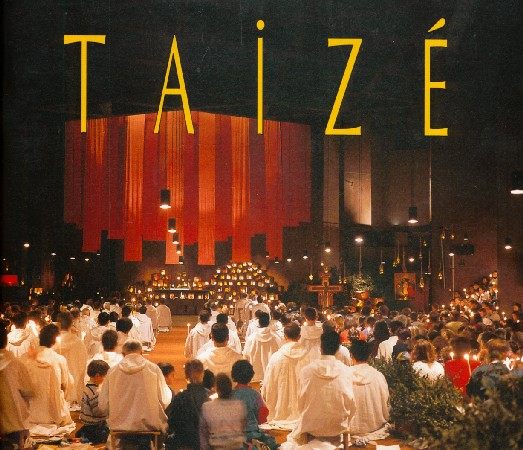
5 things I learnt from Taize

There is a small village a few hours’ drive from the city of Leon in France that has become known around the world for it meditative chants.  This village, known as Taize, has become a place of pilgrimage for thousands of young people every month.  These young people join the Religious Community in the chapel for christian prayer services seven times a day.  Its prayer style involves singing chants that repeat one line of scripture. There are also long periods of silent prayer which is not typical of what many people believe “attracts” young people.  Perhaps Taize is so counter cultural that is grabs the hearts and minds of the young people who visit.

Taize started after the Second World War as a prayer community for people from a range of cultures.  It was symbolic for a German man, Brother Rodger, to move to France after the Second World War to begin the healing process.  The prayer community soon took over the village and the centre prayer space or chapel has been expanded over the years through a serious of rooms that can be opened or close depending on the size of the gathering.

Today the meditative chants of Taize are used around the world in churches and chapels.  People will gather for Christian meditation and use Taize chants to remind them that God is always communicating.  Many communities will use Taize prayer regularly, however some people only use the chants once a year on retreat.

In the year 2000 I had the privilege of spending a few days at Taize.  After years of singing their chants in English, it was amazing to visit this place.  There are so many parts of my experience at Taize that stayed with me over the years, the biggest one being that God can use a variety of forms to reach young people.  Here are five things that Taize reminds me to consider in ministry:

  1. Simple decoration – The decoration of the front part of the original chapel in Taize is quite beautiful but it is simple.  The rest of the chapel is very basic (there are no seats) yet in this environment people encounter God.  When ever I hear people in ministry talk about needing lights, dynamic PowerPoint’s and elaborate sound systems to reach young people, I remember that Taize didn’t need any of these to help people encounter God.  Perhaps the move to make youth ministry events into mini rock concerts has not been as necessary as many would think.
  2. Simple Liturgy – One of things that struck me about prayer at Taize was that everyone transitioned between chants with ease.  How can two thousand people finish a chant together without any leader?  Some of our ministry events have become too “wordy” with an MC or service leader announcing every little detail.   When planning your next ministry event remember some of the basic liturgical principles and reduce the announcements.
  3. Volunteers – everywhere I went in Taize there were young people who would volunteer to serve the rest of the people gathered.  People would serve in the kitchen then others would volunteer to hand out the simple meals.  There were musicians who volunteered to play during the prayer sessions even if they were there for a few days.  There were a large number of volunteers who cleaned dorm rooms, showers, toilets and the chapel space.  Sometime our events have a very small team doing everything because we don’t break down the tasks.  Taize was very good at breaking down tasks to a manageable size and had people to show you how to help out.
  4. Party – After a really moving night time prayer session I remember leaving the chapel in silence, you could hear a pin drop.  As the two thousand people left the chapel many moved down to the cafe and food area.  Within in an hour there was singing and dancing many different languages.  It is important to remember that even though Taize encouraged meditation and silence, these young people had the freedom to have an unstructured party.  Remember that young people can’t be serious all the time, they need time to break out of the program into self-directed party time.
  5. Once off – whilst some people return to Taize several times, many people go to Taize only once in their lifetime.  Sometimes in ministry we are looking for a program that we can run every week for years without changing.  Taize has taught me that some great events should be used in moderation.  Perhaps in your ministry you need to consider a variety of styles and use some style once or twice a year.  Instead of the usual youth ministry event consider a counter cultural experience like Taize.

There were some forms of simplicity that I struggled with at Taize, especially the basic accommodation and even more basic food.  But there are many things which were so out of my comfort zone that they drew me deeper into reflecting on my relationship with God.  In a time where churches are moving away from doing liturgy with young people, Taize reminds me that some experiences need to be counter cultural.

So the next time you are planning to run an event for people in your church how about keeping the music and decoration simple, develop a good liturgy that doesn’t need an MC, empower people to offer their little bit as a volunteer and finish with a big party.

Please comment about how you may have used Taize in your ministry.

markoffaith.net

markoffaith, MarkofFaith, mark of faith, Mark of Faith, mrmarkmcdonald, Mark McDonald

5 things I’ve learned from the Hillsong Church

Recently I moved to Melbourne from the North Western Suburbs of Sydney. It surprised me to hear people comment about the influence of the Hillsong Church here in Melbourne, especially their music. It seems that in Melbourne, as in Sydney, many people don’t agree with everything Hillsong does, yet people do admire or envy their influence, size and growth.

Given that I used to live in the same suburb as the Hills Campus of the Hillsong Church, I have picked up a few good ideas about ministry from their church. Whilst I have attended many services at Hillsong and have attended three of their conference, I have never been on staff or been a leader in the church. This post is an “outsiders” perspective on a church which I admire and respect.

So unlike the critical tone that I sometimes hear in some circles about the Hillsong style, I thought I would share five positive things that I learnt from the Hillsong Church:

  1. Worship should move people: I often hear people criticize contemporary worship music for relying on lights and “rock music” to influence people. What I have learnt from Hillsong worship is that worship should move people; it should stir up a response. What ever denomination you worship in, the worship should not be something you do but a total experience of the power and love of God.
  2. Preaching should be passionate: I often hear people criticize evangelical preachers for getting “too worked up”. It is as though the preaching of the Word of God should be restrained and formal. Yet I have noticed that even secular public speaking has become more passionate and less formal. Which ever denomination you preach in, it should show a passion for God’s Word that inspires and motivates the audience.
  3. Giving should change the world: I often hear people criticize contemporary churches by saying they only want my money. Before leaving Sydney, my local parish church asked me to increase my giving by $5 a month for new air conditioning. At the same time the Hillsong church was raising money to help fight trafficking of sex workers in Greece, help fight teen drug addiction and build churches that reach non believers. Several years ago Hillsong raised over a million dollars to build a church in Iraq. In which ever denomination you give money to, it should help change lives not build more Christian castles.
  4. Events should shift thinking: I often hear people criticize contemporary churches for running “slick” events like they are rock concerts or corporate motivational speakers. In the conferences that I have attended run by the Hillsong Church I have been presented with some great speakers that help shift my thinking. I have heard talks from people that I have disagreed with, but it shifted my thinking. In which ever denomination you run events for, don’t just go through the motions of “how we have always done things”; create dynamic experiences that shift the audience in their thinking.
  5. Influence brings criticism: As you can gather I hear people criticize “big” churches or big events a lot. Perhaps it is the “tall poppy” syndrome but people like to comment on how other churches have got it wrong. If we look at the fact that in Sydney alone Hillsong would influence over 20 000 people every weekend, that kind of influence is going to attract attention. Add to those numbers the campuses they have in London, Capetown, New York and several other cities it seems that the Holy Spirit must be present in their ministry. Given the Great Commission (Matt 28) calls us to reach all the nations, I have to admire a Church that has that much influence.

Whilst this post is not meant to be a leveled evaluation of everything that the Hillsong Church does, I did want to change “usual” commentary that I hear to admit that I have learnt something from Hillsong. I would encourage every ministry leader, in what ever denomination they lead in to at least see what they can learn from a church that is influencing the world.

Please leave a positive comment about what you have learnt about ministry from the Hillsong Church. We have all heard the criticism so please add to the positive conversation rather than post more negative thoughts.

markoffaith.net markoffaith, MarkofFaith, mark of faith, Mark of Faith, mrmarkmcdonald, Mark McDonald

How do I get my Senior Pastor to understand my vision?

It seems that many youth pastors or youth ministry coordinators wish that the senior leaders in their church would have a better understanding of the needs and vision of the youth in their church.  In fact a common complaint in youth ministry is a “lack of support” from the church council or board of elders.  As I read many youth ministry books it is a topic that has been around for decades.  So what is my response to the question:

“How do I get my Senior Pastor/Vicar or Parish Priest to understand my vision for the Youth Ministry?”

Before I get into my answer I want to share the answer of three “mega-church” youth pastors who have now become Senior Pastors.  A few years ago I was attending the youth ministry forum at a conference where this question was put to three famous “mega-church” Youth Pastors:

  • Judah Smith had just taken over from his father at City Church in Seattle after running a youth ministry that was reported to have over 2000 members.
  • Phil Dooley had just started the Capetown Campus of the Hillsong church after running a youth ministry that was reported to have 5000 youth across three campuses in Sydney.
  • Carl Lentz had just started the New York campus of the Hillsong church after running a very successful youth and young adult ministry in Florida.

When this question was put to the three of them sitting on stage in front of 250 youth ministry workers, most of us were hoping for a little support.  In fact they gave the opposite view, that there should be no separate youth ministry vision.  Judah Smith stated that it was the job of the youth ministry leaders to implement the overall vision of the church in the youth ministry.  Judah said that he told his father, who was the senior pastor, don’t try to make the vision sound “youthy” that is our job.  These three leaders all suggested that the youth ministry should try to understand the senior leaders vision for their church.

Now you might think that these three leaders are in a league of their own so their statements don’t apply to you.  But how many youth would be “big enough” to have a separate vision for the youth ministry?  One could argue that having a youth ministry of over 2000 people could be big enough to have a unique vision but it may lead the youth ministry to drift away from the rest of the church.  If however you want your youth ministry to be part of the church then why not adopt the vision of the church you wish to be a part of.  If 2000 people was not “big enough” for these three leaders to have a separate vision then why is 20-50 youth be “enough” to have a separate vision?

In my opinion the youth ministry and the young adult ministry should serve the rest of the church by sharing and supporting the vision and mission of their church.  So here are a few tips to help you deal with this question in your situation:

  1. Talk to your Senior Pastor/Vicar/Parish Priest – help him understand the ideas that you have for the youth ministry and work with him to fit them into the vision and mission of your church.
  2. Get involved with the Church Board/Council/Elders – don’t wait until the vision is set in stone to have your say in the formation of the strategic direction.  Attend meetings and put youth issues on the agenda, don’t wait to be asked for your opinion.
  3. Raise your concerns or thoughts behind close doors and support the vision publicly – once you have had your say then support the team.  Remember it is not your ministry but the ministry of your church so support the senior leaders in public.
  4. Help young people understand the vision – use the vision and mission statement of your church in your ministry.  Perhaps you need a few youth relevant images or stories but don’t change the meaning of the mission and vision.

To put things into perspective for most of us (i.e those who are not “mega-church” youth pastors) check out this great blog post 10 easy steps to make your pastor love student ministry by Benjamin Kerns at Average Youth Ministry.

And for those who might say “isn’t the Bible our vision and mission statement?”, yes it is but you only have to check out the thousands of mission and vision statements on church websites to see why this is an issue.

How have you worked with the leadership in your church to align the vision and mission of the youth ministry with the rest of your church?  Please leave a comment

Define your Charism not your ministry label


You only have a spend a little time in the Church to realise that there are so many labels and stereotypes out there.  If you have been a ministry leader then perhaps you have given other ministries labels or maybe you have been stereotyped yourself.  In the past few weeks I have been bombarded by all the different labels in our Church as people try to describe a particular church or ministry to me.  Here are a few labels people use:

  • Conservative or Liberal
  • Liturgical or Evangelical
  • Pentecostal or Evangelical
  • Charismatic or Doctrinal
  • Social Justice or Missional
  • Seeker Sensitive or Bible Believing

Perhaps you know of a church or ministry that could easily fit into one of these labels.  Whilst we all think that our own ministry is more rounded than just one label we tend to badge others ministries with a narrow label.  What if we were to change our thinking about how we define our ministry and the other ministries in our community?  What if we were to recognise the Mark of Faith in a leader, a ministry or a church instead of how they are different to us?

One way to do this is to define your charism not use the traditional labels that define your style of Church.  A charism is a special “flavour” given to a church, ministry or group of Christians by the Holy Spirit to build up the Body of Christ.  So we start to recognise that the Holy Spirit has given us a particular way of doing ministry to reach a particular group of people in our particular community.  We can then learn from other ministries without having to change them because they are trying to reach their particular community with their particular style.

Here are a few examples:

  1. You may not be a Hillsong Church but you may use Hillsong Music.  The Hillsong church in Sydney has been graced by the Holy Spirit with a particular Charism, their style of worship, to build up the Church.  A church that started in a community hall in North west Sydney has now produced worship music sung by millions of people.
  2. You may not be a Taize community but you may use Taize chants.  The Taize community in France has been graced by the Holy Spirit with a particular Charism, their meditative chants, to build up the Church.  A community that started in a small village has a style of prayer used by millions around the world.
  3. You may not be in a Jesuit church, school or community but you may use the Jesuit method of discernment.  The Jesuit’s, originally from Spain, have been graced by the Holy Spirit with a particular Charism, their method of discernment, to build up the Church.  A community that begin with a few men in Northern Spain has now educated millions of students in colleges and school on every continent.

I could go on but you get the picture.  We can’t try to be a church that does everything; we can’t mix Hillsong music with Taize chants because they suit different people and different styles.  However we can recognise the different parts of the Body of Christ rather than labeling ministries.

In your own leadership, ministry or church what is your Charism?  It is helpful to define your Charism by two things:

  1. What does the Holy Spirit want your ministry to contribute to the Church?
  2. Define what you stand for not what you are against.

It might be a little idealistic of me to think that we could drop the labels in the Church and see each others place in the Body of Christ.  But what we can do is remember that the Holy Spirit does not give labels to a ministry, the Holy Spirit blesses a ministry/churches with a charism for the building up of the entire Church.

How would you define your Charism?  Please leave a comment.

Two ways to start something new

At times we feel God is calling onto something new but we are not quite sure what it is.  Maybe you feel that you need a fresh idea, a new ministry, extra team members or a different job.  Here are two great stories about Peter in the Bible that teach us something about how God calls us to begin something new.

1. Jesus calls Peter to fish on the other side of the boat (John 21:6) – Peter and the Apostles have been fishing all night and haven’t caught anything.  They have gone back to their trade after the death of Jesus and they know these waters very well.  Yet an unknown man, Jesus, stands on the water’s edge and asks them to cast their nets on the other side of the boat.  They cast their nets on the other side of their boat and they catch so much fish that the nets begin to tear.

To me this is a story about beginning something new within the same boat.  Sometimes in ministry we have been tying something without much success but we don’t feel called to jump ship.  If we are to keep going within the same boat (a particular ministry or church) then perhaps we just need a new perspective for a fresh catch.  Perhaps there is a ministry within your church that has not been

producing but it is a good team of volunteers, then start something new with the same team.  This new ministry activity will produce fresh energy that could lead to growth.  Or maybe you have a good model for a ministry but you just need to inject some new people into the team.

Sometimes God calls us to stay in the boat but fish with a new perspective.

2. Jesus calls Peter to walk on water (Matt 14:27-29) – Peter and the Apostles are in a boat again, this time they are caught in a storm.  Peter is worried about their safety when suddenly Jesus comes to them walking on water.  Jesus calls Peter to get out of the boat and walk across the water to him.

Again in this story we have Jesus calling out instructions to Peter.  This time Jesus is calling Peter to leave his boat.  To me this is a story about having the faith to leave the comfort of what we know to follow Jesus into something new.

There are times in our ministry career where we have to leave our established boat (a particular ministry or church) to venture out into the unknown of a new ministry.  Just like Peter in this passage, we have to have the faith to take the initial step out into the unknown without knowing the outcome.

Sometimes God calls us to leave our boats behind and follow him.

In the first story there can be a certain amount of comfort because you know the ministry, the church or the team.  When God calls us to fish with a new perspective the challenge can be to inspire the team of volunteers to give it one more go.  The resistance can come from people who say “we have tried things before and it didn’t work.

In the second store there really is no comfort because we are called to step out into the unknown.  When God calls us out of the boat the challenge can be to have enough faith to take the first leap into the unknown.  The resistance can come from people who are scared by the uncertainty “what if we cant do it?”

Maybe it is time for you to begin something new but is it within the same organisation or are you called to leap out into the unknown.  Both stories show us that following God takes faith and courage to get something new a try.  Please leave a comment.

Sabbatical – Part 2 – Rest

When I moved cities from Sydney to Melbourne late in 2011, I planned to have at least four months off full time work. There was so much that I wanted to accomplish in my time off, but as I wrote in a previous post I wanted to see it as a Sabbatical as well. There were so many things that I wanted to do and see. I planned to go to coffee shops everyday and write, read and plan for the next phase of my life. I wanted to explore this new city, meet lots of people and build connections. Yet in just the second week into the move I got sick and had to sleep most of the week. My third week was not that productive either and I told myself it was just the colder melbourne weather. In the following weeks I got frustrated with myself for not doing enough, I thought that I was “wasting time”. This sense of wanting to “do” so much now that I wasn’t working full time would have continued had it not been for one passage of scripture:

“There remains, then, a Sabbath-rest for the people of God; 10 for anyone who enters God’s rest also rests from their works, just as God did from his. 11 Let us, therefore, make every effort to enter that rest, so that no one will perish by following their example of disobedience.” Hebrews 4:9-11

It seems that God not only rested from His good work but granted rest to those who were faithful to Him. In my plans for the four months off full-time work I had forgotten to allow for God to grant me rest. My plans were so much about continuing the work that I had done over the past 20 years of ministry. It seems that the adrenaline of doing ministry was preventing me from resting in God, which means a rest from doing the work of ministry. In order to really understand my sabbatical I had to understand rest and enter a time of sabbath rest.

There are a few things that I learnt about rest since being on sabbatical over the past four months:

  1. If we trust in God we take a break – looking back on the last few years of ministry I failed to take a break because I thought I needed to keep the momentum going. In reality I was keeping the ministry in my hands rather than handing it over to God. If we really believe that our ministry will fall apart if we take a break then we are showing no trust in God. The quickest way to burn out is believing this “season” is too busy to take a break.
  2. We need to detox from the urgent – looking back on my ministry I realised that the urgent drew me in as it is exciting. It is exciting to get into things than need to be done “right now”. Sometimes we need to see the eternity of God and detox from the adrenaline buzz of the urgent parts of ministry.
  3. We are more than what we produce – sometimes in ministry I felt that I wasn’t accomplishing anything, that the ministry wasn’t working. Yet when I look at it through Gods eyes, God was growing me as a person. God was achieving more in me than through me. Since looking back I now realise that I am more loved by God for who I am than what I achieve for His Kingdom.
  4. If God wants to achieve something, it will get done – who am I to think that God needs me or the church will fall over? There is an arrogance in the thinking that I have to achieve everything right now, perhaps I need to be more in tune with God’s timing than the desires of my own heart. Looking back over the past few months I have discovered that God’s timing is perfect, I was just too busy doing ministry to see that.

So that is just a little bit of what I have learnt since being on Sabbatical. In the past four months I haven’t been to as many coffee shops or done as much writing or built as many projects as I thought I might, but God has strengthened me through the sabbath rest that He has granted me. Looking back I see this past four months as a great blessing.

Whilst I have learnt these few things I am still not out of the woods. The challenge is to implement what I have learnt when I get back to work and back to ministry. In the coming months I will begin the real difficult time of trying to regularly enter sabbath rest when ever ministry gets “busy”. My one encouragement for you and for me as life gets busy is to take a weekly sabbath rest. Perhaps it can’t be Sunday as you are working, but find some time in your week to stop doing and listen to who God is helping you to be.

Please leave a comment on how you have rested during the busy times in ministry. What do you do to relax and enter into God’s rest?

Sabbatical – Part 1

Being a Somebody

As a leader have you ever been in the situation where a person knows your name and this is the first time you have met them face to face?  Have you every introduced yourself and when you said where you worked the other person nodded like they knew the church or ministry?  Have you ever been in a situation where you are presenting to a room full of people and as they all leave they tell you they enjoyed your talk but you have no idea who any of them are?  Have you ever been in a meeting and the person running the meeting turns to you specifically to ask you your opinion?  If you have been in any of these situations then it seems you might be a “somebody”.

It seems that as leaders, especially in ministry, we can be known by more people than we know. 

I always thought that I lead with humility but since being on sabbatical for the past four months it seems that I had come to expect that people knew who I was.  There is a little bit of pride in me every time somebody knows who I am, it tells me that I am important.  I like being in a room full of leaders and the facilitator turning to me to ask for my opinion.  Whilst I thought that I handled it well, be in a new city where nobody knew me, it taught me there is a little bit of pride and arrogance in me.

Being a “Nobody”

Over the past four months nobody has known who I was.  I haven’t run into a single person who knew my name before I had met them.  The closest that I had come was when I have been called “Jesse’s Dad” or “Aidan’s Dad” at the boys school.  Since coming to Melbourne I have deliberately introduced myself as a stay-at-home-dad so that I learn the humility of being a person, not a position.

It has been hard being in situations where I would love to share my opinion and nobody calls on me.  Or meeting people at church and when they find I am new to the parish they treat me like I am new to Christianity.  It came be refreshing to not know anything about anything.

The Blessing of being “Nobody” on Sabbatical

There are three things that I have learnt from being a “nobody” here in Melbourne:

  1. I am a person not a position – it seems that I had pride in being a position.  Perhaps I was hiding behind the position so that others knew me first; letting me of the hook of having to make the first move to get to know someone.
  2. Everyone has something to share – now that I have been the person in the room with something to share but no position to share it, I have learnt how valuable the opinions and experience of the group are, not just the positional leaders.
  3. Listen more than you talk – I have sat back and done a lot of listening over the past four months.  I have learnt more than I did in the previous 12 months where I talked more than I listened.

Perhaps you won’t get a chance to have your own sabbatical anytime soon.  Over the next couple of weeks I will be posting more of my learning’s from my sabbatical.  Whilst my sabbatical has not been as structured as an academic sabbatical, it has been four months where I have been intentional about listening to God (read more here in Sabbatical – Introduction).  Perhaps you might learn something for your leadership position or your ministry.

Please leave a comment, especially if you would like to know specific about my sabbatical that I write in a future post.