
3 reasons we love the Olympics

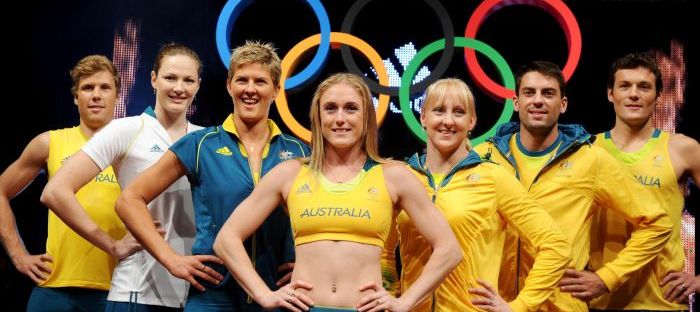
As the London 2012 Closing Ceremony is finishing off I am reminded that I don’t get up early for any other sporting event.  In fact most of the people I mix with either don’t talk about any sport or they only talk about football, except during the Olympic.  Over the weekend I had conversations with people about almost every Olympic sport, yes even rhythmic gymnastics and nobody talks about that ever.  So why is it that every four years we become sports fans and then crawl back into normal life for another four years?  Nobody will be getting up early to watch Sally Pearson in three weeks time to run at her next athletics meet.

Here are three reasons that people love the Olympics:

  1. We celebrate success – lets face it, we love people who are successful.  In Australia we like to cut the tall poppies down to size but deep down we celebrate that they were successful to begin with.  Perhaps it is our own desire for success that leads us to celebrate the success of others.  We love to cheer on someone who has trained so hard as they put in that last effort to try for Gold.  It seems that we love that someone who we don’t know, but is from our country, has been successful.
  2. We see the Olympics as pure – we love that the Olympians take an oath, we love that the athletes are encouraged to try their best, we know that sponsorship is removed from clothing and the officials do their best to eliminate drugs in the sport.  Whilst the games are not pure, we like to think they are.  The athletes take the same oath if they are million dollar professional or sacrificing everything just to compete.  This year several athletes got huge applause for giving it a go as they were from countries with only a few athletes and very little chance of making the finals.  Deep down we love the idea that the Olympics is seen to be sport stripped downed to its essence.
  3. We like the bigger story – we love that the Olympics is part of a bigger story that has happened over the decades.  The athletes in London 2012 took the same oath that athletes took after each World War.  The Olympics has been in boom times and in times of depression, the Games must go on.  Yet it is not just about the events because sport goes on every year.  It might be that there are people from 208 countries represented even if the government don’t see eye to eye on every issue.  It is the fact that we learn about the Olympics at school then past it onto our children and maybe inspire them to do something great with their life.  The Olympics becomes more than sport, it reminds us of the bigger global picture.

In some way the Olympics is more than just a sporting event.  The Stadium that was packed with spectators to watch the 10 heats of some athletics event this week will be empty next week.  It seems we can focus our attention at this time but we can’t live like that for ever.  We celebrate the high points because we don’t have to always live at that level.

 Without wanting to sound too much like I have the rose-coloured glasses on, I do realise that there are three reasons why people don’t watch the Olympics:

  1. They don’t like sport – not everyone likes sport, some people can’t even fake that they are an expert sports commentator for 16 days.
  2. They have other things to do – sometimes life is busy and we are just too busy to notice, good on those people who are working hard.
  3. They are reminded of their own lost dreams – it is sad to hear when people avoid the Olympics because it reminds them they haven’t achieved their dreams.  It isn’t always about sport either, some people just realise their life hasn’t turned out how they hoped.  It is saddest because they can’t celebrate the success of others.

That is my thoughts as the Olympics wraps up.  Whilst I may have appeared to be an expert on swimming, sailing, cycling or athletics for the past 16 days, I will return to being the novice I really am.  I won’t watch Sally in three weeks and I won’t care about diving, gymnastics, sailing or badminton any longer.  But I will take an interest in the success of others because if the Olympics has taught me anything it is that we must celebrate the success of others and not always focus on ourselves.

If you are wondering why this topic might appear on the Mark of Faith blog about faith, ministry and leaders look at the three reasons mentioned above.  We like our church to be successful, we like to see our theology as pure and we are part of God’s bigger story.

markoffaith, mark of faith, Mark of Faith, MarkofFaith

Where are you heading personally? Vision Part 2

In a previous post I wrote about where are you heading in your ministry.  Whilst it is important to steward your ministry well, most of us won’t stay in the same ministry our entire life.  So how do you work out a vision and direction for your life that fits into what God is doing within the ministries that you are planted?

When I was younger I thought my youth group was the best thing I had ever done.  Every Sunday night I would go to Church, during the week we would catch up, I would write talks, help out with meetings and do whatever was needed.  After three years of giving everything I had to this ministry I started to see life after the youth group.  It was like I grew out of the youth ministry as I grew older and I needed to move on.  Since then I have seen the same pattern repeat itself within every ministry I have served in; it is just the length of time that changes.  Sometimes it is six months sometimes three years sometimes 10 years.

In your life have you seen this pattern in ministry:

  1. Discover a new ministry
  2. Soak up everything you can from the group
  3. Devote everything you have to the ministry
  4. Pass on everything you do to other leaders
  5. Move onto the next phase of your life

It is Ok to spend a season in a ministry and move on.

The challenge for us is to be guided by what God is calling us to rather than drifting from ministry to ministry.  If you are going to stay in ministry long enough to contribute, you have to go through a period where it may not be as enjoyable as when you first started.  If you leave a ministry when ever it is no longer enjoyable then you are not moving by God’s call but by your own desires.

Here are four things to help you determine where you should be heading personally:

  1. What is your calling?  Your calling doesn’t usually look like a job description.  It isn’t often that your life’s call is Year 12 Geography teacher at Summer Bay High.  Your calling is some way that you will make a different in the world so describe it in unique ways.  Your calling is most likely not just the things that you are good at but the things that make you stronger as a person and as a disciple.  Your calling will never draw you away from God but will help you build God’s Kingdom in a special way.
  2. What season are you in?  You may be in a season of growth; you may need a season of rest.  You need to reflect on what season you are in because God may be asking you to sow into a particular ministry for a particular time.  If you feel you must commit somewhere for the rest of your life then you may miss the opportunity to sow into a great ministry for a short period of time.
  3. What are you preparing for?  Are you developing your craft for a future season?  We can be so focused on what we are doing now that we forget we need to be preparing for what is next.  This might be further study, it might be connecting with mentors who are at the next level, it might be reading more books or developing your platform.  Even if you are in a season of great productivity you should be preparing for the future.
  4. What is your life’s work?  Sometimes you need to imagine how you will view your life after you retire.  Whilst most of us have no idea about every single job that we will hold in our life, it is important to focus on what significance your life will make as a whole.  Some people will have three or four ministries throughout their life others will serve in 10-15 different places.  What difference will your life make as a whole in the Kingdom of God?

Whilst this might sound focused on you, I really believe that we have to let God be God.  We have to constantly be asking God how can I serve you?  It is not our vision but God’s vision that we should be following.  If you are heading nowhere in your life then you will get there.  If you want to be heading in the right direction then you have to be looking to God.

markoffaith, mark of faith, Mark of Faith

Where are you heading? Vision Part 1

Andy Stanley wrote that the end of a God ordained vision is God.  So if you are heading towards a vision then you want to make sure that it is God ordained.  You want to make sure that you are doing what God created you to do with your life, in order that you can come closer to God.  The reverse would be true as well; the end of your vision is you, because it is you that set the direction and it is you that chose what was important.

In ministry we can often get lost in a minefield of vision, which is ironic because vision should be crystal clear.  The reason that we get lost is because we don’t know whose vision to follow:

  • Senior Minister – any Senior Minister has their own reason for being in ministry and they have the greatest say over what is seen as important in your church.
  • Elder’s board or church Council – are the church leadership team really discerning God’s ordained vision for your church or is it vision by consensus?  Sometimes church boards are made up of people who are just “helping out” and have no clue what God wants for their church, other times a church board is filled with the most gifted people.
  • Finance Committee – a good finance committee works out how to achieve the vision that God has ordained, yet in some churches the Finance committee determines what vision the church can afford.  If God ordains the vision then God will provide, don’t settle only for what you can afford.
  • The Ministry – we often are look for the new vision for our ministry as though it is separate from the vision that God has for our Church.  Don’t let your ministry be heading in a different direction from the rest of your Church.

So how do you know which vision to follow?  We know from scripture that people without a vision will perish so which one do we pick?  It is important to reflect on these key things:

  1. Branding is not vision – sometimes we rush into a vision statement because we need to brand our ministry.  A good vision can take at least six months to discern, most likely it will take around 12 months.  A vision is going to set you heading in a particular direction for the next ten years where as your branding will only last 2-3 years at best.  If you like a particular style of marketing or branding then run with it but don’t confuse branding for vision.
  2. You are not your ministry – it is important for you to separate your own personal vision from that of your ministry.  God wants you to do something with your life that may be different to what God wants from the ministry you serve in.  In reality the ministry should keep going long after you have left the position but God still wants you to build the Kingdom even though you move onto the next position.  Don’t confuse what you want to do with your life with where God is calling the ministry to go.
  3. Ministry has its season – perhaps you don’t know where your ministry is going for the next ten years but you can discern where you are heading for the next season.  In youth ministry it is sometimes difficult to have a vision beyond five years.  In University ministry students move on every 3 years so a vision must accommodate each season being quite short.  If you are called to lead for a season then pursue the vision as best you can and leave God to work out the next season.
  4. Ideas come with a strong vision – when you have a strong vision of where you are heading over the next 10 years then usually you are full of ideas.  People who run out of ideas are either run out of vision or are heading in the wrong direction.  One church used the phrase  “no rowing ministry” to describe when the wind has changed direction but we row the boat where we want to go.  If your vision is God ordained then the ideas will come.

A practical example

There was a Church that started a youth ministry by asking the young people what they wanted.  The answers that the young people gave were passionate and exciting but they were all ideas of things they could do rather than a vision of where they were heading.  The leaders called me after six months to say they had run out of ideas.  When I asked them about their vision they clearly didn’t have one; they only had a list of ideas for fun youth nights.

After focusing them on discerning a vision and asking them to think about where they were heading they came up with a list of what they wanted young people in their ministry to be like.  In the end they clarified a vision around helping young people to know Christ.  Over a year later they were still going strong and they were developing more leaders and they were full of ideas.  Where there was no leadership towards a vision the group almost collapsed but when the leaders had a strong vision of where they were heading then the group thrived.

So where are you heading?

markoffaith, MarkofFaith, Mark of Faith, mark of faith

What do you want to do?

In the last couple of weeks I have been running around seeking advice from lots of different people when it struck me “what do I want to do?”  Whilst this might seem like a simple revelation it was helpful for me to see that God has placed desires in my heart to help me achieve certain things in the circumstances that God has placed me.  If other people want something done then either they can do it or it doesn’t get done.  We can’t live our lives being driven by what others what done.

The background is that I am in a season where I am undertaking some study in preparation for future ministry.  Whilst I like the study, I also like spending time with my kids and I like my part time job and I need the income.  So whilst everyone else might have their opinion on what I should be doing, nobody sees the big picture and nobody will place my family first if I don’t.  Perhaps I don’t even see the big picture because only God knows why things are happening the way they are.

So what do you want to do with your time?  Forget what everyone else is suggesting, how will you spend your time?  What do you think God is calling you to do?  Sometimes we can be encouraged by others to take on more but often we do things to please others not because we think we should do them.  We have to have faith in ourselves that God plants the desires in our hearts.

Marcus Buckingham says that your strengths are the activities that strengthen you, give you energy and give you a sense of purpose.  When you are looking at what you want to do with your life only you and God can truly know what strengthens you and gives you life. So do the things that bring you life.

Should the 2012 Olympics be a wake up call for young people in Australia?

Looking through the newspapers on the weekend highlighted that many sport commentators are questioning the condition of the Australian Olympic team.  But it was the comments about the “Gen Y” training style from Eddie McQuire, Shane Gould and Suzie O’Neil that drew my attention.  Their thoughts about the swim team that indicated that the tough training schedule of previous generations had been relaxed to suit the Gen Y culture.  There were several other writers who commented about how distracting it was for athletes to engagement with Social Networking.  At least from the number of medals won it hasn’t paid off.

It seems that many of the successful countries in these Olympics have not given in to “Gen Y culture” in their training techniques.  Whilst many people question the “medal factories” in China, countries like Great Britain and the USA still demand a lot from their athletes even if they are Gen Y.  There are even some commentators who point out that Australia Gen Y athletes have only grown up in  the super investment period leading up to the Sydney Olympics.  The reality is that the funding is drying up or at least slowed down in many sports.  Whilst the Australian athletes are doing their very best, there isn’t a Gold medal for everyone at the Olympics.

Whilst the articles in the weekend paper were focused on sport, the reality is that the globally trend of young people having the pick of jobs is over.  In his book “Generation Y” Peter Sheahan believed that Gen Y had forever changed the corporate culture, yet the bubble may have burst due to the economic downturn.  In many countries, perhaps except Australia, youth unemployment has gone back to  at least 20%-30% which means young people can’t be as picky with where they work.  Young people are again having to take work where and when they can get it rather than choosing where they feel like working.    The dominance bubble that Gen Y and Youth Culture have had over the past 10 years may burst with the reality of economic crisis.

The wake up call is out there for young people, particularly in Australia, now that the choices are shrinking.  In the economic boom Gen Y were able to buy everything they wanted, travel where ever they wanted and work where ever they wanted.  During the sporting life of Gen Y Olympians there has been a boost in funding ever since 1996 in the lead up to Sydney 2000.  Talk to a Gen Y Australian and they will tell you about where they want to work and what they want to do with their life.  Talk to a Gen Y from Ireland, Greece, Portugal or Spain and they are just trying to find a job.   My own hope is that it should be a balance of young people having options and young people having to earn their way to the top rather than have it handed to them.

This is not meant to be a beat up on our Olympic team or on young people in general.  It just seems from observing the media on the weekend the landscape that young people are facing globally has changed and our young people have been sheltered from it because our economy is doing so well.  It also seems that whilst young people may be natives in the technology landscape they are unaware of how distracting social networking can be to achieving in life.  It seems that there are some important lessons for young people to learn from the experience of Gen Y athletes at these 2012 Olympic games.

What are your thoughts?  Please share a comment below.

Mark of Faith, markoffaith, MarkofFaith

Overall presentation at Events matters

Have you ever been to an event that has exceeded your expectations?  Have you been to an event where everything looked perfectly in place, well laid out and everything flowed smoothly?  Sometimes in the rush to get our events ready we overlook the presentation of the event to focus on the content.  Whilst content is important, bad presentation spoils content every time.  For example, imagine a poorly designed website which may have great content but you can’t find it.

Last night I went to a youth ministry event by Mustard that exceeded my expectations.  Mustard is a ministry that runs events in schools here in Melbourne and were hosting a Roundtable event for Parents and Youth Leaders.  After almost 20 years in youth ministry I have seen all types of events from well-done presentations to complete train wrecks.  This event was above the average events I attend, even many of the good events that I have been to.  There were just a few things that caught my eye that were better than standard events that I go to.

Here are a few little things that made the overall presentation at the event better than other youth ministry events I have attended:

  1. Welcome signs – as the event was on a large church campus with many rooms there were signs directing me from the car park to location of the event.  Often event coordinators assume that people will follow the crowd or look for where the lights are on to know where the event is being held.  As an event coordinator help participants find the right room with a few welcome signs.
  2. Greeter – at the main foyer there was a person who greeted me and directed me along the hallway to the sign up desk.  At the sign up desk there was a person greeting people in front of the desk and several people behind the desk taking registrations.
  3. Name tags – I am used to writing my name on a name badge with a marker but these name tags had my name printed on the tag as well as the event logo. 
  4. Event logo – The team hosting the event had designed a logo for the event and printed the logo on the registration form, name tags, PowerPoint slides and handouts.
  5. Button Badge – each team member had a button badge with the ministry name on it.  It was that extra step that impressed me.  Each of the team members were smartly dressed rather than dressing like young people because it was a youth ministry event.
  6. Stage set up – there were a few props on stage that got the crowd talking as they entered the room.  These props were then used at a point within the event to explain a key message.
  7. Skype call to Guest – there aren’t many events that attempt a live feed of a guest from another country.  Mustard had a live feed of special guest Cheryl Crawford from Azuza Pacific University and Fuller Youth Institute in the USA.  This isn’t a multi million dollar ministry either; they were just using skype but had done their homework on how to get working well.  Cheryl had been prepared ahead of time and they had a plan for drop outs, which did happen, to keep things moving.
  8. Hospitality – the coffee and tea were laid out really well and there were nice cupcakes to go with the drinks.  Whilst we drank our tea and coffee there were team members connecting with the crowd.  There was a musician creating atmosphere with some live music.  There were also large posters of other ministry events on art easel’s to create atmosphere.

Whilst the ministry team had gone to all this effort to get the overall presentation correct, the content delivered as well.  As we connected over coffee and tea the participants were talking about the content of the talks. If you are interested in the content of the night you hear an audio copy of the event on a special website, click here, which again is above average for many events I go to.

Presentation should enhance the content of an event rather than dominate it.  Yet sometimes we rush our preparation, setup and layout to focus on the content and we overlook how important presentation is.  Take the examples about as a guide of how you might exceed people expectations at your next youth ministry event.

Please add a comment about events that you have attended where the presentation exceeded your expectations.

You might also be interested in Creating a Big Impression at Church

markoffaith MarkofFaith, mark of faith, Mark of Faith

Facebook Friends

Facebook friends can be “real” friends

Facebook FriendsIf you have ever heard someone comment about how many friends they have on Facebook, almost straight away someone else will say “but none of them are real friends”.  There is an assumption from many people that Facebook is not a “real” way to maintain a friendship.  Whilst this might be true for an older generation, the reality is that most young people do see their relationships on Facebook as real friendship.  Usually it is the people who are not on Facebook that under play the important role that social networking plays in maintaining friendships.

So consider for a minute what it might take to maintain a “real” friendship.  Would you consider these situations to be real friendships?

  • Pen Pals: for centuries there has been great prestige in being pen friends.  In many cases the people never meet face to face.  Whilst your grandmother may consider her pen friend more of a real friend than your 500 Facebook friends does it make it true?  Can you develop a real friendship without ever meeting face to face?
  • Long distance friends: people often move interstate and catch up with their friends when ever they are back in town. Some people think these are real friends compared to Facebook friends even though they don’t see them regularly.  Can you maintain a real friendship seeing someone face to face only once or twice a year?
  • Life long friends: some people who are cynical about the role of Facebook in maintaining a friendship reference their life long friend as the bench mark of real friendship.  Whilst they may have built the friendship over decades they maintain this friendship with as little as one or two events a year.  One of my colleagues lives in the same city as his friend but only sees him once a year at Christmas, another colleague sees her life long friend once a year because they are both so busy with their new lives.  Is real friendship based on longevity or how often you communicate?
  • Family:  all of us know that blood is thicker than water and yet we all have family members who we only see at Christmas, Weddings or Funerals. Sometimes we don’t see our family as much as we should.  Is a real friendship based on an established connection?

Think about the young person who is on Facebook every day catching up with what is happening in the lives of their 500 friends.  They know what is happening every day or two with their close friends, workmates, classmates, long distance friends, life long friends and family.  Compare this to the “real” friendships that Facebook objectors are maintaining through as little as one or two face to face meetings per year.  Before you think that I really think all Facebook friends are real friends I don’t, but my point is that many teenagers that we work within youth ministry do.  It is not appropriate to dismiss Facebook as a valid way that young people maintain friendships.

So here are four ways to use Facebook to maintain friendships with people in your ministry:

  1. Watch and listen – people will say and type things on Facebook that they don’t share in person.  If you want to know what a person thinks about then study what they do and say on Facebook.   In ministry you have to be careful not to raise Facebook activity in public forums but you can raise things in conversations with the person face to face.  For example, “I saw that you visited ……. For a holiday, what was it like to be there?”
  2. Comment – it can be seen as Facebook stalking if you read everything but never comment on posts.  Whilst we are tempted just to click “like” make the extra effort to write a comment.  Write something extra to show that you are not just gathering information but that you are developing the relationship.  In the last year or so people are engaging less and less in comments so try harder to make a comment or two.
  3. Groups – the benefit of creating groups is that you can start to link people who may have a similar interest but never meet face to face.  Be clear about what a group is about and don’t get offended if people don’t join your group.  You don’t want lots of group members, you want group members who engage in the conversation.
  4. Birthdays – it used to be so hard to maintain a birthday list, hours of asking each individual, now Facebook reminds you every day who’s birthday it is.  So there is no excuse for not making a comment on a person’s page for their birthday.  Yes it is not as good as a face to face present but it is better than hearing nothing for your youth minister.

So whilst we might not think Facebook friendships are the real deal, in youth ministry don’t dismiss the fact that young people see it as the real deal.  In fact if you start to use social networking more effectively in your ministry you might find it easier than ever to be influential in the lives of the people you’re trying to minster to.

If you disagree with this concept or you have a warning about using Facebook in ministry please add a comment below.  I understand that this post isn’t the definitive guide to using Facebook in ministry but I hope it helps you in some way.

markoffaith, Mark of Faith, MarkofFaith, mark of faith

Who was praying for you?

If you have the Mark of Faith on your life then no doubt somebody was praying for you long before you knew Jesus.  There are just too many stories of people who were supported with prayer long before they achieved greatness to believe that nobody was and is praying for you.  Who was praying that God would touch you long before you even knew God?  Who was praying for your ministry long before you started in your ministry?  The prayers of the previous generation have influenced this generation more than we could ever understand, but believe me when I tell you that somebody was praying for you.

We even see this principle in John’s gospel with the story of Nathaniel, read John 1:43-51.  Long before Nathaniel knows Jesus, Jesus knew and loved Nathaniel.  It is in the conversation with his friends who have met Jesus that Nathaniel first hears about the Messiah from Nazareth.  It is with the encouragement of his friends that Nathaniel overcomes his prejudice to go to see Jesus.  It is this encounter that teaches us all that God knows us and loves us long before we come know God.

Recently I have heard a few stories from people who discovered that someone was praying for their mission years before they started their mission, here are just two:

  1. Archbishop Ben Kwashi – Ben Kwashi grew up in a church going family in Nigeria but rebelled against the faith for most of his teenage life.  In the rebellious young adult years a man talked to him about Jesus and Ben was radically saved.  In order to turn around his life he went back to his mother to share his conversion.  His mother was pleased that he had turned his life around but couldn’t see Ben as a minister.  So Ben went to his grand mother to tell her of his conversion.  His grand mother listened and responded that she had been praying since his birth that he would enter into ministry.  In the years before Ben was even a Christian there were people praying that he would become the great man of God that he is today.
  2. Matt Chandler – Matt was preaching to young adults in universities across America when the Highland Village church asked him to be their Senior Pastor.  Matt thought the church needed a lot of changes so tried his best to turn down the job.  After many meetings Matt took over the church of 150 people as their Senior Pastor.   After he took on the job one of the key elders shared with Matt that he had been praying for 15 years that God would send a Senior Pastor who could grow the Highland Village Church to influence others.  Today that Church reaches over 8,000 people in three campuses every sunday and over 50,000 people download Matt’s sermons every week.

Sure these are famous people and you might think that nobody is praying for you.  Yet I doubt that any of us come to faith without someone praying for us before we even know who God is.  Whilst I know that someone must have been praying for me I wonder who it was.  Was it my grand mother went to church every week and who used to give me 20 cents every time we visited?  Was it my mother who took me to Church every Sunday, was it my father who taught me the value of reading the bible?  Was it a De La Salle brother who encouraged me to think about religious life in Year 7?  Who else would have been praying for me?

So who was praying for you?

  • Parents: most parents pray over their kids when they are babies, even if they aren’t that Christian.  Almost every parents wants a great life for their child and God listens to those prayers.
  • Teachers: did you have a special teacher who looked after you?  did you have a teacher who encouraged you to learn and discover more?  God values teachers and uses them to build us up to enter the mission of Christ.
  • Friends:  that friend of yours who was a Christian was probably praying for you long before you became a Christian.
  • The Previous Generation – whilst we might not appreciate the older generation in our church today, they have been faithfully praying for this generation to continue the work of Christ through the Church.

So who are you praying for?  Do you pray for the next generation as much as the previous generation prayed for you?  If we slip in our understanding of this concept then we can start to think that it was our effort that saved us.  We can start to think it is our effort that makes our ministry grow not the prayers of others.  We can start to believe that God and I are alone in the task of building the Church and we forget that people help us through prayer as much as time or finance.

So thank those who prayed for you and please pray for the next generation to be stronger, even bolder and more passionate than we are.

markoffaith, mark of faith, Mark of Faith, MarkofFaith

Four types of breaks you need to take

There are many reasons to take a break from ministry to recharge the batteries and clear your head.  If you know the purpose of your break before you depart then you will enjoy your time off and come back feeling refreshed.  If you are unclear about the purpose of your break then you feel frustrated and you will return feeling as tired as you were when you left.

Whilst you may not have time to take weeks off, you can take a short break over a weekend or take a few days off mid-week.  Here are four types of short breaks that you may take from ministry over a few days or even a week:

  1. Clean up – whilst this may not be everyone’s favourite break sometimes you need to take a break from ministry to clean up and take stock.  If this is the type of break you are seeking then you will be most happy tucked away in your workspace with no distractions.  Some people like to go through their work space or files to clean up months worth of clutter.  A short clean up break will help you clear your mind at the end of busy time or to prepare for a new season in the ministry.  People often take this type of break in late December or early January, but perhaps there is a better time of the year for you to take this break.
  2. Rest – perhaps you are running on empty and you could do with 15 hours of sleep.  This won’t be a very productive break so you need to prepare to get nothing done.  Some people take time off to rest then fill their days with cleaning or visiting friends then wonder why they still feel tired at the end of the break.  If you are run down and tired then sleep in each day and take an afternoon nap.  It can also be helpful to do some exercise in the afternoon to help get the blood flowing and oddly this will help you sleep better at night.  It is important to watch what you eat when you are resting and stay away from heavy foods and caffeine.
  3. Visiting – sometimes you go through seasons when you don’t see anyone outside your ministry, then you are in need of a visiting break. Take a break to catch up with friends and family.  Unlike the resting break, if you are visiting friends then you will fill your day with appointments to see people.  Unlike the person who has shut themselves away to declutter, you want to get out and see people.  You will get energy from other people but avoid people who connected with the ministry.  Perhaps you need to turn off your ministry mobile and focus on the conversations of the people in front of you.
  4. Get away – every once in a while we need to escape by going away.  Some people have found that they never fully switch off if they are in the same city as their ministry, others the same state as their ministry.  Some leaders need to get away to a different culture so that it highlights the environment that they minister in.  If this is your need then it is a little more expensive so save those penny’s.  Perhaps there may even be someone in your ministry that owns a holiday home, caravan or tent.

Whilst you might tend to spend your holidays doing one of these types of break, we actually need all four types of breaks within our annual calendar.  If you balance your time throughout the year across all four types of breaks then you will feel refreshed and prevent burn out.

Michael Hyatt has a podcast and article where he talks in more depth about knowing the purpose of your vacation, which would also be helpful to check  out.  Michael outlines a few important steps before you leave on a break which I encourage you to look at.

If you have any tips on taking a break please share your ideas with other by leaving a comment in the area below.

markoffaith, mark of faith, Mark of Faith, MarkofFaith

Creating a big impression at Church

Creating a Big impression at Church

Creating a big impression at ChurchThere are occasions in every Church calendar when the leadership team want to create a big impression.  Perhaps it is an outreach event, a new members night, Back to Church Sunday or the first night of an Alpha Course.  Whilst we can’t create a big impression all the time, there should be one or two events every year that really create the big impression to visitors.  Whilst we all look for shortcuts to creating a big impression, the reality is that a big effort creates a big impression.  In a world where everyone is bombarded with excellence, people are still impressed when an organisation makes an effort to impress.

For example this week I have been taking my boys along to our local church holiday program.  As we walked to the church on day one, I was expecting the boys to have a good day with other kids from the area.  When I arrived at the church the entire foyer was decorated with a jungle theme including hand made vines hanging off the rafters.  There was a welcome team that opened the front door for us and showed us how to register.  By the time I had dropped my boys off, they were so impressed by the foyer that they were expecting a great day.  The foyer experience had created a big impression on me and my boys.

Michael Hyatt suggests that the “Wow Factor” is created when an organisation goes beyond our expectations.  In other words to create a big impression an organisation has to go beyond the effort that people are expecting.  But there are some guideline to remember when creating a big impression so that you don’t burn out your team:

  1. Cut back  – it might seem odd to suggest that you cut back on events in order to create a big impression at Church but you can’t do everything.  Your team will have to decide on what they will stop doing in order to create the time and space needed to put in the big effort required to create the big impression.  Perhaps instead of doing 10 events that require a lot of effort you could scale back to three or four big impression events.  Some churches have cut back from holiday programs every term so they can put the effort into one big annual holiday program.
  2. Beg and Borrow – no ministry has the budget to do everything they want to do, so think about low cost ways to create the big impression.  One ministry drove a car into the church foyer to create the wow factor for a father’s day event, another church put a king size bed on stage for an event on Marriage (both items were owned by church members).  Think about items that you can get or borrow for free and then use them in interesting ways.
  3. Centre piece – if you do have the budget for decoration, then spend it on the focal point in the room.  When people are sitting or standing for the longest part of your event where will they be looking?  This focal point is where you can spend your money and biggest effort.  You don’t want to spend money on the foyer if the participants will spend 3 or 4 hours looking at a blank wall behind the guest speaker.  However if you are after positive first impressions then what will a guest see first?
  4. Recruit Volunteers – having lots of volunteers will make it much easier to set up and pack down.  We often forget how much effort it takes to pack up the event at the end, so organise the pack up team before you start.  The more volunteers you have to make things before the event the less you will have to spend on items made by someone else.  For example Conference bags are a standard item that create a big impression if it is full of useful items rather than just a pen and blank paper yet it can take hours for volunteers to stuff 100 conference bags carefully.
  5. Invite people to the event – if you are going to spend time and money on creating a big impression then you want people not just to see it but experience it.  You need to spend as much effort on inviting people to the event as setting up for the event.

It is often said that “Excellence honours God and inspires others” and yet this takes a lot of effort.  If you want to create a big impression it is going to take a big effort.  After reading this post perhaps you need to lead your team to think through the rest of  annual calendar to choose one or two events that are going to get the big effort and which events won’t require as much effort.

You might also like to read about creating excellence at Church

Also please leave a comment about how you have created a big impression at your Church.

markoffaith, Mark of Faith, mark of faith