
Are there “Flashbacks” in the Bible?

Sometime when people want to be critical of the bible they point to passages in the bible that they call “errors”.  An issue that some critics raise are what they perceive as chronological errors.  Some critics look at stories that are out of chronological sequence as a proof that the bible is made up.  Yet if we look at modern day film making, we may have a clue to why some passages in the bible seem out of chronological order.

For example in Judges 1:1 we read that Joshua died, yet in Judges 2:6 we read that Joshua is still alive sending out the nations then dies again.  Did the author get it wrong? Is this a chronological error?  Is this a different Joshua?  In Genesis 10 we read that after the flood, people filled the earth yet in Genesis 11 all the people are back in the one place, is this right?

It seems that some people look at these literary tools as “errors” in the bible but when it happens in modern movies we all call these “flashbacks”.  Whilst I use this term here I have to be careful because the ancient writers didn’t use the term “flashbacks”.  However if you want to explain some literary tools of the bible in terms that young people might understand then you can suggest the parallel to flash backs in modern movies.

For example in the movie Tinker Tailor Soldier Spy we see one character go into an optometrist to get a new pair of glasses.  Whilst the scene is quiet boring and might seem unimportant, the film maker uses the two different set of eyewear to show different periods of time in flashbacks.  When the character is wearing the old set of glasses the audience knows it is a flashback without the date having to appear on the screen.

So flashback to the example in Judges, the author is reminding the reader that Joshua sent out the nations to fill Canaan because it explains the problems Israel faced in chapter 1 and the rest of the book.  So Judges 2:6-8 is like a mini flashback to remind the reader of an important point for interpreting the future chapters.

Likewise with the earlier reference to Genesis 10 and 11.  In Genesis 10 the author is showing what happened after the flood involving Noah and so finishes the narrative with the people filling all the earth, which would have taken some time.  In Genesis 11 the author has a flashback account to explain why the people dispersed rather than stay together in the one place.  This is not a chronological error in the bible, simply a literary tool that the author uses to tell compelling accounts of God and God’s people.

What other “flashbacks” can you see in the Bible?  Leave a comment.

Would you do what you ask your workers to do?

There is a WorkSafe campaign on Victoria television at the moment with the slogan “would you do what you ask your workers to do?”  In each of the seven 20 second commercials a supervisor asks a worker to do something that is obviously unsafe and the worker agrees.  The point of the campaign is that workers are asked to do unsafe things all the time, just not that obvious.  Of course a worker would never do something unsafe if it was that obvious but what if it wasn’t obvious.

Check out the adds: Worksafe victoria


Whilst the campaign is frightening it drives home the point that we can’t ask people to do something that we know is unsafe.  One supervisor asks the young worker to work on a broken machine, another asks them to work in an inappropriate desk, another to fall off the back of a motor bike on a farm and another to work on a roof without a harness.

So it got me thinking about the situations which we ask our young ministry workers to go into.  Here might be a sample add:

Church leader: Will you work in our church unsupervised with no support but with all the responsibility, you will receive complaints from parents and church members, you will burn out after 18 months and probably hate the church for a while?

Young Leader: Sure

Church Leader:  Oh and we will pay you less than you would get at a fast food restaurant but work longer hours

Young Leader: Sure

If you think this is a far fetched situation then why is it all too common?  Why do we ask people to take on children ministry or youth ministry for 8-10 hours per week?  Many young people take on jobs in ministry for low pay with little supervision because we take advantage of their interest to serve the Church.  My hope is that we reduce the turn over rate of young ministry workers by putting into place support systems for our youngest leaders.   I know some churches can’t pay any more but lets give them the best mentoring and supervision available, lets disciple them like Jesus would.

Would you do what we ask young worker to do?

Never use “and finally” unless you are finishing

Have you ever been listening to a long presentation and heard the magic phrase “and finally” which you thought meant they were finishing but they spoke for another 10 minutes?  Recently a speaker who was really boring used the phrase “and finally …” and I wanted to yell out “it’s about time”.  But some people use the term “and finally …” to state their last main point before they begin their 10 minute conclusion.  In my mind if you use the phrase “and finally” I expect you to be done in 2 minutes.

The trick that many speakers don’t understand is that there are some phrases that mean one thing to a presenter and mean something different to a listener.  A presenter might use the phrase “and finally” to sum up their argument but it is often perceived by the listener to mean “I am finishing up”.  If you use this phrase then you have about 1-2 minutes to finish or you will lose your audience.

So here are a few phrases that should only be used in the last 2 minutes of a presentation:

  • And finally
  • To finish up
  • I will finish with this
  • To wrap up
  • So next week
  • The worship team may come up

“My last point” is a grey area because I think it is the same as those terms listed above.  If you have four points use the word “four” to describe the fourth point as the phrase “my last point” implies you are in your conclusion.

So why is this important?  Because people remember your conclusion if it is done well and they switch off if it is done poorly.  You want to drive home your message in your conclusion with what the audience should do next; so it isn’t helpful for the audience to switch off.  If a speaker goes on for too long then the listener is trying to predict when the speaker will finish rather than listening to the message.

So finally work on your transitions so you don’t use these ending phrases midway through your presentation.

Burn out in Youth MInistry

Burning out vs Natural turnover in Youth Ministry

Burn out in Youth MInistry

Is it Burn out or Natural turn over in Youth Ministry?

In Youth Ministry it seems that leaders turn over every 2-3 years, if a church is lucky they may get 4 or 5 years before changing leaders.  Whilst there are many youth ministry veterans who promote the value of long term tenure, it seems that 10 year veterans are rare in our industry.  It made me think about the difference between turn over and burn out.  Is burn out being disguised as natural turn over?  Are some people leaving youth ministry because their time is up or do they burn out but call it turn over?  Could some leaders go on longer if there was more support?

These thoughts started when a friend asked me if I was burnt out or just needed to move on from my last position.  In some ways it was a bit of both.  After 5 years it was getting time to look for a new challenge but I was also finding it hard to recharge my energy levels.  This friend has seen many leaders in youth ministry burn out, yet she said that often people dismiss it by saying they were “getting too old for youth ministry”.

So how can we spot the difference between natural turn over and real burn out?  Here are a few thoughts from my experience:

Turnover:

  • You can choose when to leave – it is a great freedom to be able to choose when you finish up in a leadership position.  For example when I got engaged I turned over my leadership to a new leadership team because I felt the team was in good hands and I need to start a new journey.  Another time I turned over my leadership position after I finished a two year project and it was time for a younger leader to have the opportunity I had.  Natural turn over often happens when the time seems right for both the ministry and the individual.
  • You leave with energy for the next ministry – it is a great blessing to finish one ministry and move into another ministry.  It is a great thrill when a youth leader finishes up with the youth ministry because they are taking on a ministry in the adult congregation.  I remember leaving my church council to begin an outreach ministry and I left with so much energy and wisdom from the church council.  Natural turn over often happens when a person is passionate about moving on to another ministry.

Burnout

  • You leave later than you should – it is easy in sport to see when someone retires one season too late.  They say a person should retire at the top of their game.  Yet in youth ministry people often hang on a season too long because there is no replacement.  We can stay in ministry one season too long because we have no transition plan.  I stayed in one ministry for too long because I wanted stability and was scared to face change.  People often burn out because they feel guilty about leaving until it is too late.
  • You leave without any energy – Sometimes we stay on too long in a ministry and we quit because we are exhausted.  When a person finds it hard to begin a new season and lacks the energy to begin again they are burnt out.  People often burn out when they run out of energy from trying too hard.

Is burn out just part of youth ministry?  Whilst I would like to say it shouldn’t be, burnout is all too common in our industry.  Burn out should not be an occupational hazard, it should be avoided.  I think we should celebrate Natural turn over in youth ministry rather than hiding it when leaders leave.  Natural turn over role models healthy behave.  It encourage people to be healthy enough to choose when they leave and allows them to start a new ministry with energy.

Please leave your thoughts on burn out and turn over

What I have learned about discipleship from Grand Designs

Some of you may have seen Kevin McCloud hosting the TV show Grand Designs.  Whilst the program shows off some amazing houses renovated or built by British people in Europe, it was the style of the host that impressed me.  Kevin McCloud has hosted over 90 episodes of the show, which in the TV industry is a big deal.  In the eight seasons, Kevin has witnessed many building mistakes, challenges and failures.  Yet Kevin McCloud has also been there when 90 home owners have showed off their Grand Design success.

When I watched the show recently, it taught me something about being there to support someone as they undergo a journey through something.  What interested me the most was how the style of Kevin McCloud could be a style for mentoring future ministry leaders.  Kevin McCloud is an expert in his field and yet supports the home owners who are going through the build or renovation for the first time.  As ministry leaders we may have seen it all before but the people in our ministry are often going through issues for the first time.  How can we support these people through mentoring and discipleship?

So here are four things that I learnt from watching Grand Designs:

  1. Allow the person to share their vision – there is always a segment in the show where Kevin asks the home owner to share their vision for their project.  This is makes the show as much about the people as it is about the house being built or renovated.  In a ministry context, we should allow the people we are discipling to share their grand design for their life.  The process of mentoring and discipling should be on the individual, not what we can do for them or what we can teach them.
  2. Ask probing questions– Kevin McCloud would have seen every mistake in the book yet he never gives the home owner all the answers he asks probing questions:
    1. Why are you doing it that way?
    2. What problems do you see a few steps down this path?
    3. What other options do you have?

In the ministry context this reminded me that we need to let people discover things for themselves.  It is tempting to give away all the answers because we have been there before.  However people need to make some mistakes and have some failures so they develop their own strategies for dealing with difficulties in their life.

  1. Let people surprise you – Whilst Kevin McCloud knows the show will work out in the end, it has for 90 episodes, Kevin is still surprised by how many home owners attack problems and overcome challenges.  In a ministry context allow people to surprise you and learn from the way they overcome challenges.  Rather than “lording” your experience over the people that you mentor and disciple, allow yourself to learn from them.
  2. Celebrate their success – Each episode of Grand Design finishes with the home owner showing off and celebrating their new home or grand renovation.  Many people have gone way over budget and taken much longer than planned but they are happy with the result.  Kevin McCloud celebrated their success with them.  In a ministry context we should celebrate the successes of the people in our ministry rather than reminding them of how much they still have to learn.  Learn to celebrate the small steps that people in your ministry make.

If you ever get the chance, what Kevin McCloud host an episode of Grand Designs.  You can see many of the episodes online.

The Excellence debate

“Excellence honours God and inspires others”

Have you ever gone into a church for the first time and seen something that made you think “that is a little out of place”?  Have you ever been to a church or attended a ministry event and thought things looked a little sloppy and could have been done better?  Or on the flip side have you ever been to a ministry event that ran like clockwork and you were impressed?  It seems that we all have our own interior benchmark of what we think is “done well” and what we think is “done poorly”.

Yet I often hear from people that the Church needs to pick up its game in terms of the standard of events, presentation and hospitality.  I have also heard from others who say the Church should never be too slick or fancy.  Whilst some churches are pursuing excellence others are deliberately keeping things low budget so as not to look perfect.  So my two questions for today are:

  1. What level of excellence is appropriate in the Church?
  2. Should the Church worry about excellence?

Let me start by giving you a few examples that I have witnessed from the best and worst of excellence in church and ministry:

Worst

  • I attended a young adult camp where the worship band left plates on stage from breakfast.
  • One church had posters for a youth group that looked like they were designed by a kindergarten class.
  • One church foyer had three different style of notice boards, posters about Christmas at Easter time and a pile of lost property that just looked messy.
  • A guest speaker had to rearrange the stage before he could start speaking because the musicians just walked off without clearing the stage.

Best

  • My church has a well-designed event template for all their posters so they look professional even though the ministry leader drops their event details into the template.
  • A ministry team that turned the cheap hall they hired for a youth camp into an inspiring place for worship.
  • A café night at church that had tasty food with enough for everyone to have extra.
  • A celebration night at church that had proper wine glasses and plates for the food (no plastic forks!)

These are just a few things that I have noticed.  But what have you noticed?  I invite you to leave a comment at the end about what you judge to be the best and the worst of excellence in church and ministry.

  1. What is the right level of excellence in the Church?  The right level of excellence is doing the best you can with the best you’ve got.  Excellence doesn’t mean spending more money; you have to have excellent budgeting skills too.  Excellence is about enabling people to encounter and experience God without any barriers in the way.  If the goal is excellence then we have failed.  Excellence is a tool to help you bring people into an encounter with God.
  2. Should the Church worry about excellence?  The Church should do the best it can to make it easier for people to encounter God, make disciples and join in the Mission.  The Church should be a place that inspires people to see the grandness and greatness of God.  People in ministry should offer the same level of service, or higher, that a person would get if they visited a hotel, restaurant, shopping centre or cultural museum.  I think the problem is that we either don’t inspire people or we go back to “traditional” methods that Christians used last century to inspire people but they don’t inspire 21st century people.

Recently I was listening to a podcast with Louie and Shelley Giglio about the level of excellence at their Church, Passion City Church.  They shared their thoughts about the right level of excellence in two ways:

  • When they get ready for Church or events their team doesn’t pray for excellence, they pray that the Holy Spirit might touch people.  For Passion City Church, it is not about achieving excellence but removing barriers.
  • When the Church is excellent in presenting its craft, services/ministry, then it encourages people to go into their jobs and be excellent at their craft.  Louie said “the best evangelism happens when your lifestyle is so inspiring that people ask you what makes you tick.”

So don’t kill yourself or stress your team or break the budget to achieve excellence in your ministry.  But please don’t be sloppy, unprepared or messy as it doesn’t do anyone any favours.  Could you please leave a comment about what you have seen as the best and worst of excellence in church and ministry?

Easter Sunday

We celebrate people who overcome

Rejoice! Rejoice! Christ has Risen, Christ is Risen.  Today, Easter Sunday, we celebrate that Jesus Christ has risen from the dead.  After three days in the tomb, the stone is rolled away because Jesus has risen from the grave.  The empty tomb is the symbol of Easter Sunday because Jesus has overcome death.

When we look at our society today, it is hard to explain this victory to people.  People celebrate the most amazing victory ever with cheap chocolate that gives you a quick sugar rush, then a crushing low only a short time later.  This is hardly the appropriate symbol to celebrate a once and for all victory over death.

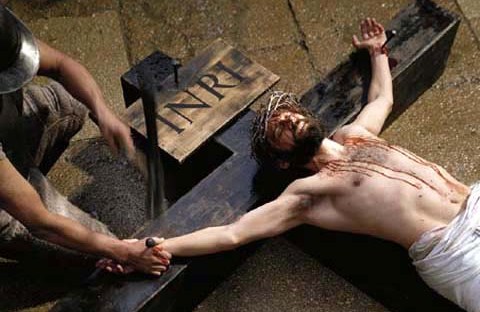
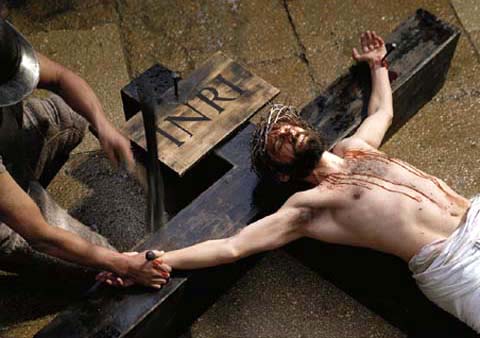
Here is a more appropriate image:

In our society we celebrate people who overcome great adversity to succeed in a task.  How much more then should we celebrate someone who overcame death?

Let me give you a few examples:

  • My Son’s Year 5 teacher went in the Melbourne IronMan event that involved a 3km swim, 100km bike ride and a 42km run.  It would be a great achievement to complete one of these legs but she finished all three.  The school community celebrated her achievement; she was a hero to all the boys in her class.  It was because the task involved difficulty that people celebrated her achievement.
  • I worked with a teacher who was planning a trip to Mount Everest.  In the training he discovered he had cancer.  He was determined to beat cancer so he could make to Everest base camp.  After months of therapy he had overcome cancer and made it to base camp.  Overcoming cancer made him a hero to many people but then going to base camp was even more impressive.  It was because he overcame difficulty to achieve his task that people celebrated.
  • We celebrate all kinds of people who climb Mt Everest.  Anyone who makes it to the top is a hero.  But if you make it to the top unassisted that is even more heroic.  When a blind person climbed Everest that was even more heroic.  It seems we celebrate people who overcome great adversity to achieve a task.
  • We celebrate people who achieve in business all the time.  Yet if someone started out with nothing then we celebrate their achievement even more.  But if someone starts out with nothing during a depression, goes through a recession and comes out successful then books are written about them.  Even in the secular world of business we celebrate people who overcome great adversity to achieve a task.

So what about Jesus? Why is that we celebrate people who overcome great adversity yet we expect God to give us everything easy or God is not faithful?  Why is that we expect God to give us everything we think we want in order to show us God is great?  Wouldn’t it be more logical to let us overcome adversity so that we feel we accomplished something?

Here is the amazing thing about God:

  1. Jesus overcomes death – if you think it is hard to fight cancer in order to climb Mt Everest how much more difficult is it to overcome death itself.  Jesus didn’t just wake up from a coma caused by the Crucifixion, he had a new body, able to walk, talk and eat.  Jesus walked a few miles on the road to Emmaus only days after dying on the Cross, this is not a simple healing but a new beginning.  Jesus overcame the greatest challenge of all and we should celebrate.
  2. God is faithful – God knows what we are like and sent his Son to die for us as a sign of God’s faithfulness.  We don’t have to overcome any great challenge to join in this victory, we have it easy because God is faithful.  We can stand before God blameless because Jesus overcame death on our behalf.  Isn’t this something that we should celebrate?

My hope is that you celebrate that Jesus overcame the greatest obstacle so that we can believe that anything is possible.  My hope is that this Good News is something that you celebrate because it is greater than any IronMan, any climb of Mt Everest or any Business tycoon.  What a great day this is.

What does Easter mean to you?  Please leave a comment.

A Good Friday reflection

Can one person really die for the sins of everyone?

It seems that when it comes to the concept of Jesus dying for our sins on the Cross, many people can’t get their head around the concept.  How could one man die for all the sins of all people? People say things like “If Jesus was God couldn’t he just say you are forgiven?”  Perhaps Jesus could have done this but I think there is more to it than that.  The Cross is a sign of a greater reality.  God could have used a different sign but instead God chose the Cross.

Jewish Background

When the Israelites were giving sacrifices to God throughout the year they would give the sacrifice on the outer altar of the Tabernacle (Exile) or the Temple (Jerusalem).  They would take an animal and place their sins on the animal then sacrifice this animal as a “payment” for their sins.

Throughout the year the Tabernacle or the Temple would be “contaminated” by the sins of all the people so the High Priest would enter the Holy of Holy’s to make a once a year atoning sacrifice to cleanse the Tabernacle or Temple.

The Jewish People in the time of Jesus would understand that one High Priest could make a sacrifice for the sins of everyone because they saw it every year.  Given that modern day Christians don’t have this sacrificial system, we may not understand this imagery.  But for the Jewish people of the day, they could believe that one man can pay for the sins of everyone.

Secular Context

Think about these few examples in our secular world today:

  • Big Business – Today when a company is found to have done something illegal or wrong, the “market” calls for the CEO to resign.  The press will wage a campaign to have someone pay the price for the misconduct of the entire company.  The CEO might send someone else to take the fall on behalf of the company but someone has to pay.  After one person has resigned it seems that people continue to do business with this company as they everything it back to normal.  When one person pays the punishment the company gets a new start.
  • Criminal system – it seems that when the media find out there is a mass murder who has killed many people that justice isn’t served until they have been locked up in gaol.  Or perhaps people want the death penalty, even in a country without the death penalty.  Even though the murdered victims will never come back again, justice is seen to have been served when one person has received their punishment.
  • Sporting teams – it doesn’t take long for fans to cry for “blood” when their beloved sporting team continues its losing streak.  In AFL crazy Melbourne people are already making accusations about certain teams and it is only week two of the season.  How often do we see fans get back onside when the coach or captain is made to resign to “start a new chapter”.  How can the loss of one key player or a coach turn around a team and yet the fans seem to have a new hope.

Perhaps you might get the parallel that I am drawing with the issue of Jesus dying on the Cross for the sins of everyone.  Even in our secular non-christian society we have examples where “Justice is served” when one person takes the fall for the sins of many.  How much more powerful then is the example of Jesus who is the God who was sinned against, taking on the punishment for the sins against him?

My hope is that this Good Friday is a time for you and your family to see that God has paid the price for our sins so that we can live in freedom.  Not just a once a year payment or sacrifice like the Jewish people believed in but a once and for all payment.  Not just a scape goat punishment like in business, criminal system or sporting teams, but full restoration in our Hope because of Jesus.

Have a blessed Good Friday.

markoffaith, mark of faith, Mark of Faith, MarkofFaith

The Concorde vs the 747 … and your next ministry project

You may not know this about me but I have a soft spot for aviation.  Recently, a story came to my attention that I thought had implications for those of us in ministry.  It is a story about the battle between the Concorde and the Boeing 747.  After Boeing had failed to match the makers of the Concorde with a similar aircraft, Boeing went a different route to build the 747 Jumbo.  Here is a match of the features:

The Concorde

  • The downside – it was a very expensive aircraft to develop costing over a billion dollars to build.  The maintenance and running costs were much higher than other aircraft meaning that it became the passenger airline for the rich and famous.  It was also one of the noisiest and most polluting aircraft in history.
  • The upside – this aircraft was the first passenger aircraft to fly at twice the speed of sound, going from London to New York in 1/3 of the time of other aircraft.  Because this aircraft was so expensive the engineers had to constantly innovate to keep the costs down.  There were many new accomplishments in the design of the Concorde.  Many technical developments, such as fly by wire, are almost standard on all other passenger aircraft.
  • The Lessons for Leaders – the Concorde was such a huge project that once it was started the companies had to see it through.  Often as leaders we skip such a bold project because it will cost too much, take too long or have too many opponents.  Yet the Concorde project shows us that industry leading innovation comes out of the bold projects not the safe projects.

The Boeing 747 Jumbo

  • The upside – the Jumbo was about a quarter of the cost to build, maintain and fly as the Concorde yet it could carry four times the number of passengers.  It made international passenger flight possible for many more people than the elite that flew on the Concorde.  The Jumbo became the aircraft that every airliner in the world had to have.  It was a business smart aircraft that kept costs down.
  • The downside – the Jumbo was the “play it safe” option for the aviation industry.  I don’t want to downplay how important the Jumbo was at the time but it didn’t fly faster or raise the standard.  The Jumbo was the next step in the process of development of large passenger aircraft but it was leaps ahead.
  • The Lesson for Leaders – the Jumbo won the battle because it made more sense for the average person.  Sometimes as leaders we can have our heads in the clouds and not realise what the people we are leading actual want.  It is not a bad thing to go with the project that learns from the boldness of others.  We need to have projects that take our ministry to the next level without breaking the budget.

So what projects do you have on the horizon?

  1. Bold Projects – Do you have a really bold project that will push your boundaries and force you to innovate?  Is this a season where you can try something so bold that you ministry will never be the same?  Perhaps you need a project so bold that it forces you to pray like you have never prayed before.
  2. Next step projects – is it a season for playing it safe and learning from the boldness of others?  It is not a bad thing to take your ministry to the next level through a project that will get wide spread support.  Perhaps you need a project that everyone can get behind rather than pushing the boundaries.

Whilst the 747 Jumbo won the battle, the Concorde is in a league of very special aircraft.  With all its faults and expense the Concorde change the passenger airline industry.  However the 747 Jumbo won the battle because it made the best business sense.

Please leave a comment.

Why a parachurch may get more young people than your church

In a recent post I wrote about the 10% limit to the size of any youth group compared to the Sunday congregation.  But I bet that some of you know a youth ministry that breaks that 10% rule.  What I have discovered is that some parachurch groups are able to recruit far more members than the 10% limit.  Having worked in and with parachurch groups, there are a few key factors which enable them to reach more young people than a local church can.

Firstly what do I mean by a parachurch group?  In this context I am talking about any agency within the Church that has a specific mission to minister only to young people.  Put it another way I am talking about ministries that don’t belong to “full service” local churches.  These parachurch groups have the specific mission of meeting the needs of young people and usually they have a particular style.  These groups are a valuable part of our Church; they have a specific Charism to a specific group of people.

A few examples might be:

  1. Charismatic prayer groups
  2. Campus based ministries
  3. Market place ministries, some that meet in Pubs
  4. Social Justice groups

So why are some parachurch groups able to recruit more members than many local churches? Here are four reasons that a parachurch group might be able to get more young people than you.

  1. Narrow the focus – many parachurch groups are able to focus on one or two key activities and do them well.  When a ministry only has few things to focus on they are able to tailor everything in the ministry to these one or two activities.  In contrast a full service local church has about 20-30 groups and ministries running.  Often the resources of a local church are spread thinly across a wide range of activities.
  2. Like-minded people – there is an old saying that like attracts like; a parachurch can attract young people with a common interest.  It is easier to attract a group of like-minded people than it is to keep the interest of everyone.  Often the local church is trying to cater to the needs of everyone in their community.
  3. Independence brings freedom – many parachurch groups are able to stay independent of the mechanics of regular church councils and committees.  I was once part of a parachurch group that met every Monday night and we could plan what we wanted with the leaders whenever we needed.  In contrast when I was part of full service local church the parish council met monthly and you needed a months’ notice to get an agenda item on there, meaning it could be two months before we could make a decision.
  4. Larger drawing area – usually a parachurch will draw members from a bigger geographical area than the local suburban church.  A parachurch might host an event for 100 young people that come from 10 suburbs where as you are trying to host an event for the young people in your suburb.

Before finishing I want to add that I am not against parachurch groups, they are vital part of the Body of Christ.  Given that I have been a part of both parachurch groups and local churches, I wanted to pass on some of the reasons why the parachurch groups might get more young people than you can get at your local church.

There are many positives of connecting young people to a local church; the main reason is that the local church is intergenerational.  In a local church young people learn to connect with a wider experience of the Body of Christ.

The real lesson for both parachurch groups and local churches is to focus on what God has called them to do rather than comparing each other.  I hope this helps you in your situation.

Please leave a comment